
Car Sale Fraud Prevention Steps for Private Sellers
Discover essential car sale fraud prevention steps to protect yourself as a private seller. Safeguard your transaction and verify buyers today!
Car Sale Fraud Prevention Steps for Private Sellers
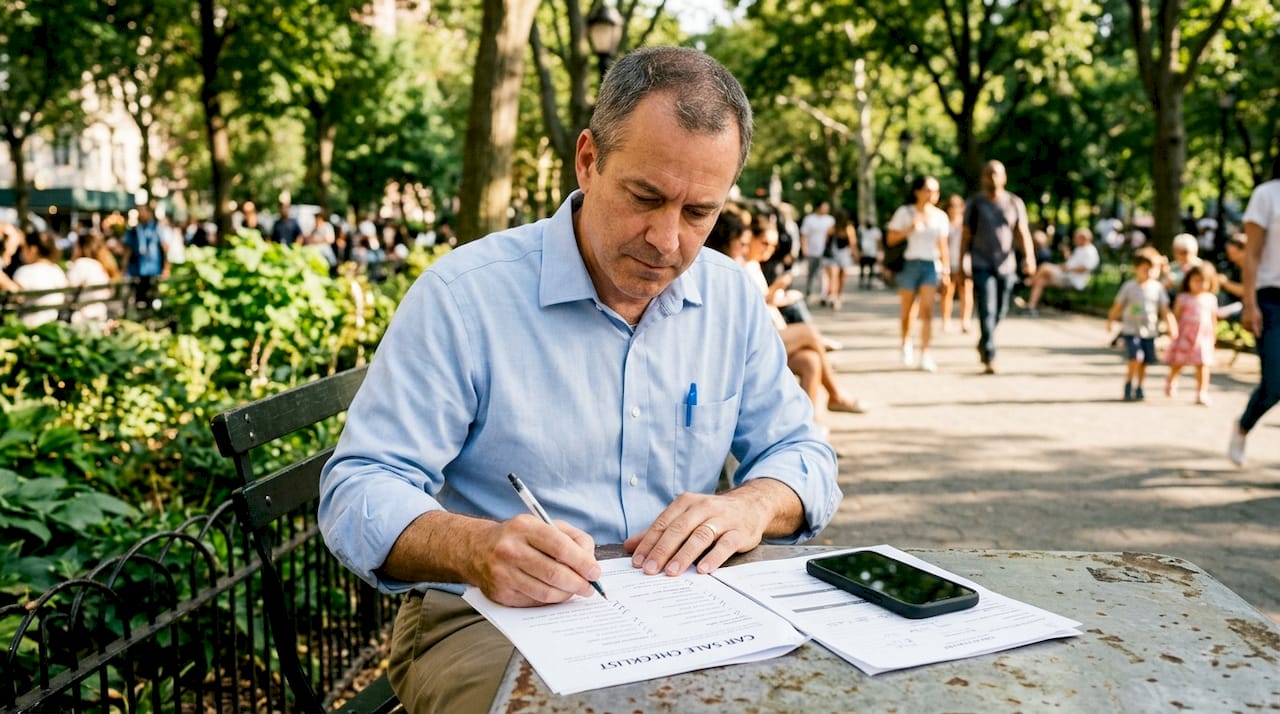
Car sale fraud prevention steps are the specific actions sellers take to verify buyers, confirm payments, and document transactions before handing over a vehicle. Reported losses from auto fraud reach tens of billions annually, and private sellers face the highest exposure because they lack the institutional safeguards that registered dealers use. Agencies like the NICB, NMVTIS, and the Federal Trade Commission provide free tools every seller should use. Knowing how car sale fraud is prevented starts with understanding that no single check is enough. A layered approach covering identity, vehicle history, payment, and documentation is the only reliable defense.
What are the core car sale fraud prevention steps?
Preventing car fraud begins before you post your listing. Consumer advocate Chuck Panzarella recommends a layered fraud prevention approach that combines identity checks, physical inspection, and verified payment methods. Each layer catches what the others miss. A buyer who passes an identity check can still present a counterfeit cashier’s check. A vehicle with a clean title can still carry a cloned VIN. Stacking your defenses is the only way to close every gap.
How do you verify buyer identity and screen inquiries?
Screening buyers thoroughly is the first line of defense against fraud. Officer Gary Baldridge stresses that urgency from buyers seeking remote transactions is a major scam red flag. Scammers rely on speed to prevent you from thinking clearly. Slow the process down deliberately.
Watch for these warning signs during initial contact:
- The buyer refuses to meet in person or insists on completing everything remotely.
- The buyer offers to pay above asking price without seeing the vehicle.
- The buyer creates urgency by claiming a deadline or limited availability.
- Contact information is vague, unverifiable, or changes between messages.
- The buyer avoids answering direct questions about their location or identity.
When a buyer contacts you, ask specific questions. Request their full name, phone number, and a physical address. Cross-reference the phone number with a reverse lookup tool. Ask where they plan to register the vehicle. Legitimate buyers answer these questions without hesitation. Fraudulent buyers deflect, change the subject, or disappear.
Online platforms use VIN checks and identity verification tools, but no platform eliminates fraud entirely. Private sellers must perform their own due diligence independently.
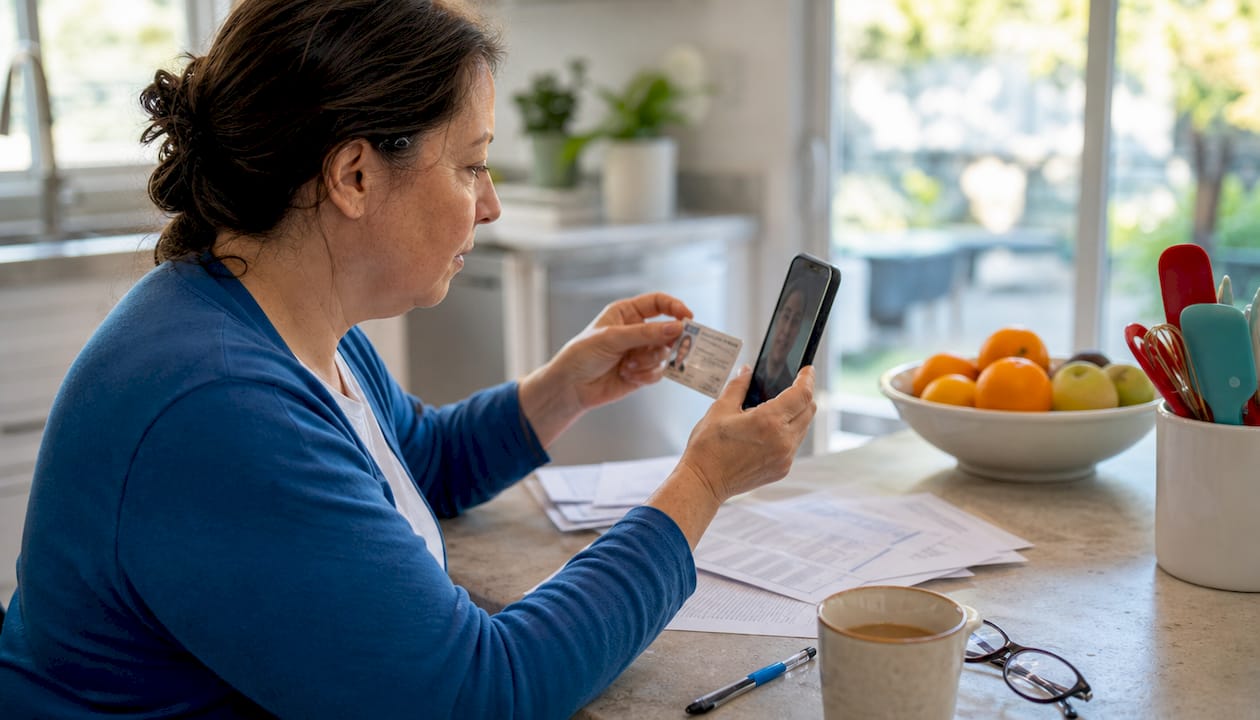
Pro Tip: Request a photo of the buyer’s government-issued ID before scheduling any meeting. Legitimate buyers will not object. Scammers almost always will.
What are safe test drive and vehicle inspection protocols?
The test drive is the moment sellers are most vulnerable. You are handing over a valuable asset to a stranger. Structure this step carefully to protect yourself.
Follow these protocols before and during every test drive:
- Schedule test drives during daylight hours only.
- Choose a public location with foot traffic and security cameras.
- Require a valid driver’s license before handing over the keys. Photograph both sides.
- Ride along during the test drive. Never let a buyer take the vehicle alone.
- Limit the route to a short, predetermined path in familiar territory.
A pre-sale inspection report from a trusted, independent mechanic adds credibility to your listing and reduces the chance of fraudulent post-sale claims. Buyers who refuse an inspection or insist on taking the vehicle to their own mechanic at an undisclosed location are showing a red flag. Legitimate buyers welcome transparency.
Pro Tip: Offer to accompany the buyer to a licensed mechanic of their choice. This shows confidence in your vehicle and keeps you present throughout the inspection process.
Which payment methods prevent fraud during a car sale?
Payment is where most car purchase safety tips fall short. Sellers focus on the test drive and paperwork but accept payment carelessly. Fake cashier’s checks are common and look completely professional. Banks can take days to confirm a check is counterfeit, long after you have handed over the title.
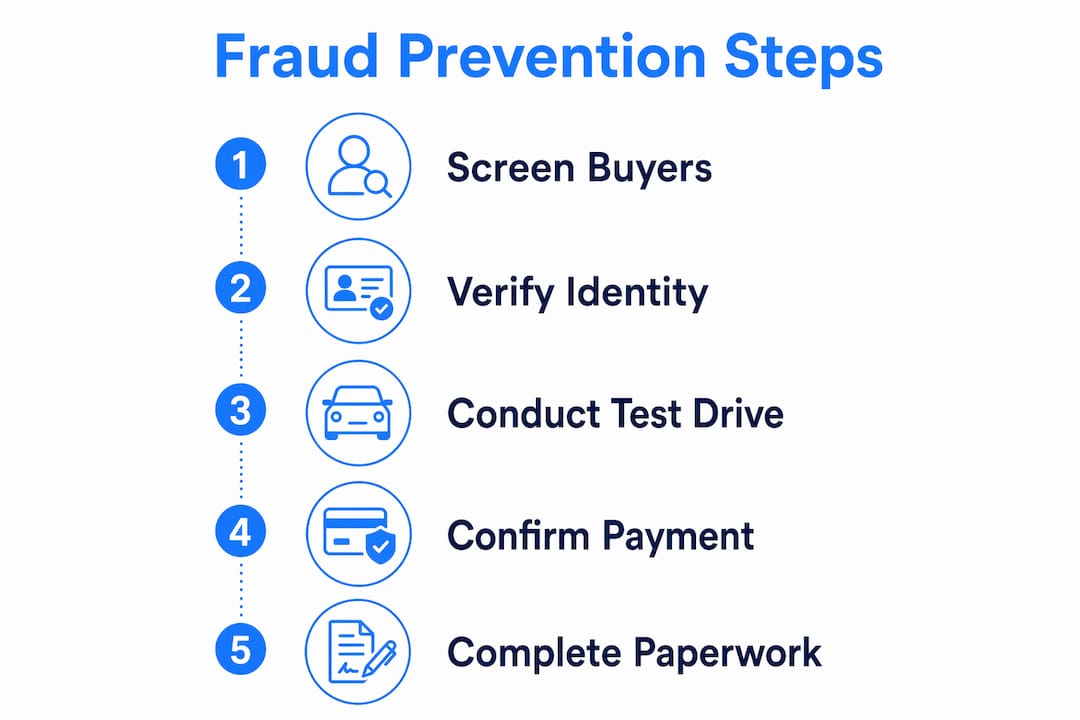
Never release the vehicle or title until payment is fully confirmed. Scammers use urgency to rush sellers past this critical step. Pressure to complete the transaction quickly is itself a warning sign.
| Payment method | Risk level | Recommended action |
|---|---|---|
| Cash (in person) | Low | Count carefully; use a counterfeit detection pen |
| Bank wire transfer | Low to medium | Confirm receipt with your bank before releasing the vehicle |
| Cashier’s check | High | Verify at the issuing bank in person before signing the title |
| Personal check | Very high | Do not accept; funds are not guaranteed |
| Cryptocurrency | Very high | Avoid; transactions are irreversible and unregulated |
| Escrow service (unverified) | High | Use only verified, licensed escrow providers |
The safest approach is to meet the buyer at their bank and watch the teller confirm the funds. Verifying payment at the buyer’s bank during business hours before signing over the title is the single most effective payment protection step available to private sellers.
Pro Tip: If a buyer insists on an unconventional payment method or pressures you to accept payment before meeting, end the transaction. No legitimate buyer needs you to accept cryptocurrency or a third-party check.
How do you verify vehicle history and avoid VIN cloning?
Detecting car sale fraud before it happens requires understanding your own vehicle’s records. VIN cloning is a scam where criminals copy a legitimate VIN onto a stolen or illegal vehicle. VIN cloning is hard to detect electronically. Physical inspection of VIN locations is the only reliable method.
Check the VIN in at least three locations on your vehicle: the dashboard plate visible through the windshield, the door jamb sticker, and the engine block stamp. All three must match exactly. Any inconsistency in font, spacing, or character style indicates tampering.
Run these checks before listing your vehicle:
- NMVTIS report: The NMVTIS provides title information including salvage and flood brands, which are critical for detecting title fraud.
- NICB VINCheck: A free tool that flags stolen vehicles and salvage records.
- Carfax or AutoCheck: Paid reports that show accident history, ownership records, and odometer readings.
- Physical VIN inspection: Check all three VIN locations for consistency and signs of tampering.
- Title cross-reference: Confirm the VIN on the title matches the vehicle exactly.
Cross-referencing NICB, NMVTIS, and paid history reports catches fraud that any single report would miss. AAMVA emphasizes that consumers are the first line of defense in verifying vehicle titles and brands using NMVTIS and related resources. Branded titles, including salvage, flood, and rebuilt designations, must be disclosed to buyers. Failing to disclose them exposes you to legal liability.
How do you complete a secure and documented car sale?
Completing the sale safely requires the same discipline as every earlier step. Sellers who rush the paperwork after a smooth negotiation often create legal exposure for themselves. A secure sale completion requires every document to be signed, verified, and retained before the vehicle leaves your possession.
Follow these steps in order:
- Confirm payment is fully cleared and verified at the issuing bank.
- Complete a bill of sale with the buyer’s full name, address, and ID number.
- Fill out the odometer disclosure statement accurately and completely.
- Sign the title over to the buyer only after payment confirmation.
- Retain copies of all signed documents, payment receipts, and communications.
- Notify your state DMV of the sale immediately to remove liability from your name.
Meeting in a police station parking lot for the final transaction is one of the most effective safety measures available. Many police departments now designate specific areas for private vehicle transactions. The presence of security cameras and officers deters fraud and provides a record if a dispute arises later.
Review the required paperwork checklist for your province or state before the meeting. Missing a single document can delay the title transfer and create legal complications.
Pro Tip: Use your state or provincial DMV’s online portal to verify the buyer’s name against the title transfer record within 48 hours of the sale. This confirms the transfer was processed and removes your liability.
Key Takeaways
Effective car sale fraud prevention requires layered verification of buyer identity, vehicle history, and payment before any title transfer occurs.
| Point | Details |
|---|---|
| Screen buyers early | Ask for ID and contact details before scheduling any meeting or test drive. |
| Verify payment at the bank | Confirm cashier’s checks or wire transfers directly with the issuing bank before signing the title. |
| Run multiple VIN checks | Use NMVTIS, NICB, and a paid report together to catch fraud that single checks miss. |
| Meet in public for the handover | Police station parking lots provide security cameras and a deterrent against last-minute fraud. |
| Keep every document | Retain the bill of sale, odometer disclosure, ID copy, and payment receipt after the transaction closes. |
What I’ve learned from watching sellers get burned
Private car sales attract fraud because sellers are motivated, distracted, and often doing this for the first time in years. The most common mistake I see is sellers who do everything right during the listing and negotiation, then rush the final 20 minutes. They accept a check without verifying it, sign the title in a parking lot with no witnesses, and hand over the keys before the paperwork is fully complete. That last 20 minutes is where most fraud actually happens.
The second mistake is trusting the platform. Sellers assume that because a buyer found them through a reputable listing site, the buyer has been vetted. No platform eliminates fraud. The verification tools these sites use are designed to reduce liability for the platform, not to protect you personally. Your protection is your responsibility.
Modern scammers are patient and professional. They communicate clearly, show up on time, and present convincing documentation. The tell is almost always in the payment or the urgency around it. Any buyer who pressures you to skip a step, accept an unusual payment method, or release the vehicle before funds clear is running a scam. Trust that instinct.
The sellers who never get defrauded are not the most suspicious people in the room. They are the most prepared. They have their documents ready, their VIN checked, and their payment process decided before the buyer ever shows up. Preparation removes the pressure that scammers rely on.
— Omar
Selling your car without the fraud risk
Private sales carry real risks, and the steps above take time and discipline to execute correctly. Sellkamocars removes most of that exposure by handling the entire process through a registered business with a verified track record of over 500 successful transactions.
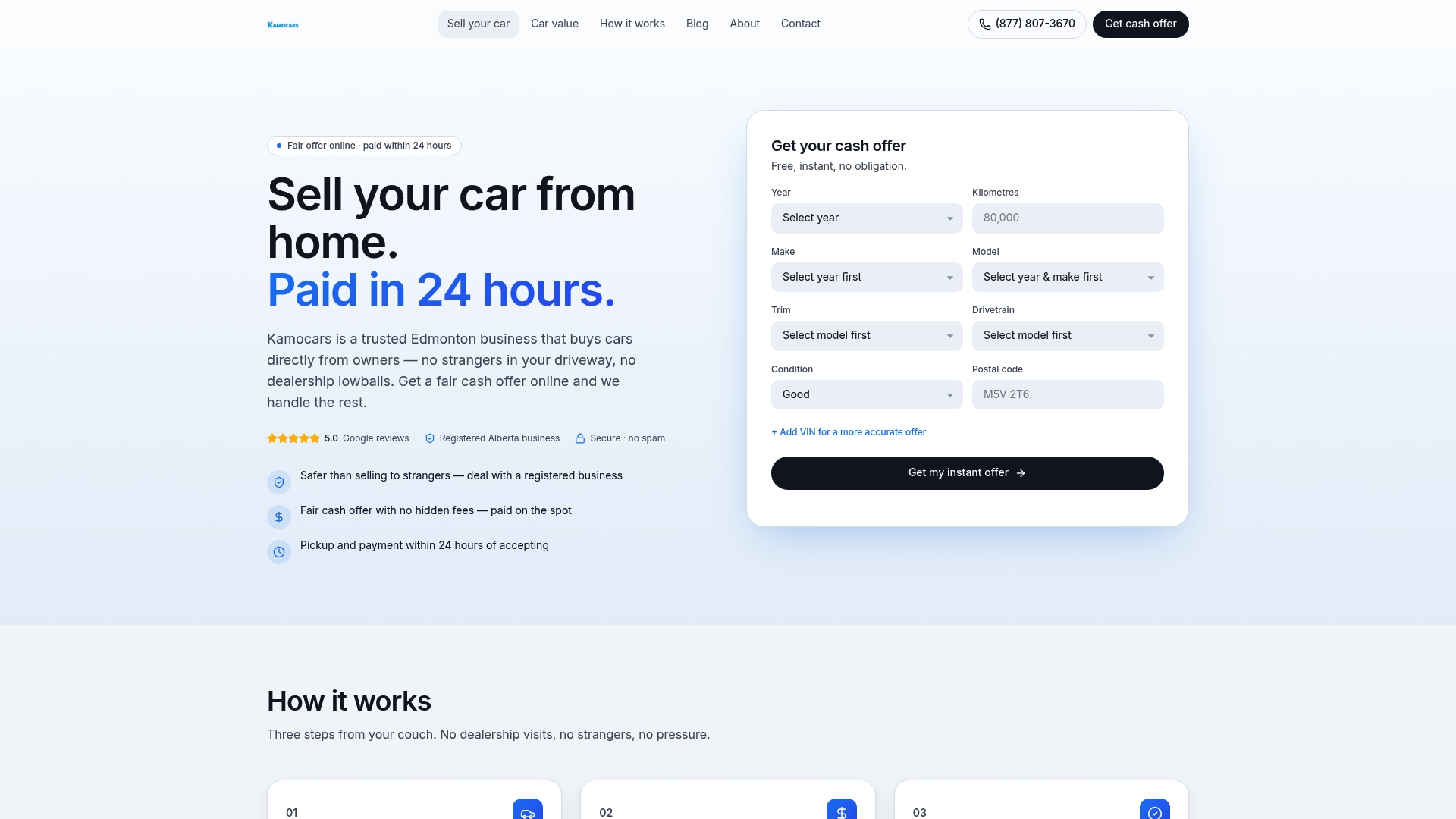
Sellkamocars provides an instant appraisal based on current market data, with free pickup and payment completed within 24 hours. There are no strangers at your door, no cashier’s check verification trips to the bank, and no title transfer disputes. The secure selling process is handled by a registered business, which means every transaction is documented and protected from the start. If you want to skip the fraud risk entirely, see how it works and get your offer today.
FAQ
What is the biggest red flag in a private car sale?
Urgency is the clearest warning sign. Any buyer who pressures you to skip verification steps, accept unusual payment, or complete the sale remotely is likely running a scam.
How do I verify a cashier’s check from a buyer?
Take the check to the bank that issued it and ask a teller to confirm the funds in person. Never deposit the check and assume it will clear. Counterfeit cashier’s checks can take days to be flagged by your own bank.
What is VIN cloning and how do I detect it?
VIN cloning is when a criminal copies a legitimate VIN onto a stolen vehicle. Detect it by physically checking the VIN on the dashboard, door jamb, and engine block and confirming all three match the title exactly.
Which databases should I use to check vehicle history?
Run checks through NMVTIS, the NICB VINCheck tool, and a paid report such as Carfax or AutoCheck. Cross-referencing all three catches fraud that any single report would miss.
Where is the safest place to complete a private car sale?
A police station parking lot is the safest option. Many departments designate specific areas for private vehicle transactions, providing security cameras and a visible deterrent against fraud.
Recommended
Get a real cash offer in 2 minutes
Trusted business. Fair price. Paid on the spot when we pick up your car.