
Why Vehicle Selling Becomes Stressful: A 2026 Guide
Discover why vehicle selling becomes stressful. Uncover emotional, financial, and legal factors contributing to car selling anxiety. Understand and manage it.
Why Vehicle Selling Becomes Stressful: A 2026 Guide

Selling a car is stressful because it combines emotional loss, financial negotiation, and legal complexity in a way few other transactions do. 52% of car owners report significant anxiety during vehicle transactions, citing fear of financial loss and negotiation pressure. That anxiety level exceeds what most people feel during other major life milestones. Understanding why vehicle selling becomes stressful is the first step toward doing something about it. The core stressors are psychological, financial, and administrative, and each one compounds the others.
Why does vehicle selling become stressful?
Selling a car triggers stress from three directions at once: your emotions, your wallet, and the paperwork. Most sellers walk in underprepared for all three. The result is a process that feels out of control from the first listing to the final signature.
The stress is not random. It follows predictable patterns rooted in behavioral psychology, market pricing dynamics, and bureaucratic complexity. Sellers who understand these patterns make better decisions and close faster.
What psychological factors make selling a vehicle stressful?
Car selling anxiety starts long before you meet a buyer. It begins the moment you decide to sell, because your car is not just a vehicle. It represents money spent, memories made, and identity tied to ownership.
Emotional attachment and the “sayang factor”
Emotional attachment causes sellers to set unrealistic prices and drag out the sale far longer than necessary. This phenomenon, sometimes called the “sayang factor” in behavioral economics, means you overvalue what you own simply because you own it. A buyer sees a used car. You see every road trip, every repair bill, and every year of loyalty. That gap in perception creates friction and prolongs negotiation.
Decision fatigue and the sunk cost fallacy
Dealerships exploit decision fatigue by making sellers wait through repeated breaks and manager consultations. Each delay drains your mental energy. By the time a final offer lands on the table, you are too tired to push back effectively. The sunk cost fallacy makes it worse. You have already spent hours in the dealership, so you accept a worse deal rather than walk away and “waste” that time.
- Emotional overvaluation: You price your car above market because of personal attachment, not data.
- Decision fatigue: Long negotiation sessions reduce your ability to think clearly and hold firm.
- Sunk cost trap: Time already spent makes you reluctant to walk away from a bad deal.
- Loss aversion: Fear of getting less than you paid overrides rational pricing decisions.
Pro Tip: Before you list your car, look up its current market value using a third-party pricing guide. Treat that number as your anchor, not what you paid for it years ago.
How do financial concerns and negotiation challenges increase selling stress?
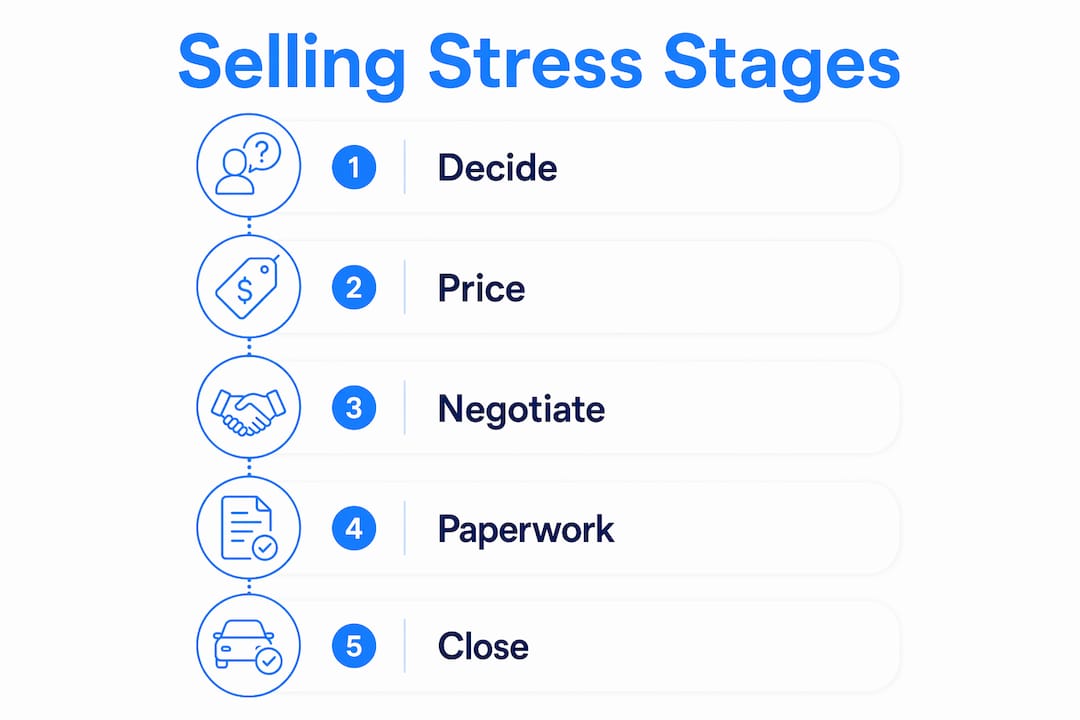
Financial uncertainty is the most cited driver of stressful vehicle sales. You do not know if your asking price is fair. You do not know if the buyer will lowball you. You do not know what the trade-in desk will offer versus what your car is actually worth on the open market.
The pricing knowledge gap
Most sellers lack access to real-time market data. Without it, you are guessing. That uncertainty creates anxiety before a single conversation happens. Buyers, especially experienced ones, sense hesitation and use it to push prices down.
Negotiation complexity
- The opening offer: Buyers almost always open below market. Sellers who do not know their floor price panic and counter poorly.
- The back-and-forth: Multiple rounds of offers and counteroffers create fatigue. Each round feels like a test you might fail.
- Trade-in confusion: Dealers often bundle trade-in value with purchase price, making it hard to evaluate either number clearly.
- Out-the-door pricing: Hidden fees added at closing can erase gains made during negotiation.
The numbers confirm this trend. The Ease of Purchase score dropped from 87% to 80% between may and june 2026, driven primarily by negotiation difficulty and trade-in valuation disputes. That seven-point drop in a single month signals how quickly financial friction erodes seller confidence.
Pro Tip: Always negotiate the trade-in value separately from the purchase price of your next vehicle. Bundling them gives the dealer more room to obscure what you are actually receiving for your car.

Transparency is the real issue. 77% of buyers still complete their entire purchase at a dealership, which means most sellers face these tactics in person, under time pressure, with no neutral third party present.
What administrative and legal hurdles contribute to vehicle selling stress?
Sellers often believe the hard part ends when the buyer hands over payment. It does not. Legal ownership transfer is one of the most stressful and unpredictable phases of the entire sale. The paperwork phase catches most sellers off guard because they underestimate its complexity.
The administrative burden includes several moving parts:
- Title transfer: Varies by state or province. Missing a step can delay the transfer by weeks.
- Bill of sale requirements: Some jurisdictions require notarization. Others do not. Sellers often find out too late.
- Lien clearance: If you still owe money on the car, the lender must release the lien before the title can transfer. This adds time and coordination.
- Odometer disclosure: Federal law requires a written odometer statement for most vehicles under ten years old.
- Safety and emissions certificates: Some regions require inspection before a private sale can close legally.
Each of these steps involves a different agency, a different timeline, and a different set of rules. Sellers who navigate vehicle paperwork without guidance frequently miss a requirement and have to restart part of the process. That uncertainty adds weeks to a sale and compounds the emotional and financial stress already in play.
How does selling privately versus through dealerships or platforms affect seller stress?
The method you choose to sell your car determines how much stress you absorb. Each channel carries a different mix of time investment, financial return, and risk exposure.
Private vehicle sales take 8–15 hours spread across multiple weeks. You write the listing, field calls, schedule test drives, screen for scams, and negotiate directly with strangers. The financial return is typically higher, but the hassle and risk are significant. Trade-ins at a dealership take around 15 minutes but deliver lower prices and expose you to the pressure tactics described above.
| Selling method | Time required | Financial return | Stress level | Key risk |
|---|---|---|---|---|
| Private sale | 8–15 hours over weeks | Highest | High | Scams, time-wasters, no-shows |
| Dealership trade-in | 15–60 minutes | Lowest | Medium to high | Pressure tactics, bundled pricing |
| Online car buying platform | 24–48 hours | Fair market value | Low | Varies by platform reputation |
Online car buying platforms like Sellkamocars sit in a different category. Sellkamocars provides a fair cash offer online based on current market data, handles pickup, and completes payment within 24 hours. There is no negotiation with strangers, no pressure room, and no paperwork maze to solve alone.
Pro Tip: If you are selling privately, always meet buyers in a public place during daylight hours and bring a friend. Never hand over the title until payment clears in full.
The comparison between selling options comes down to one question: how much is your time and peace of mind worth? For sellers who prioritize speed and safety, a registered buying service removes the three biggest stressors in one step.
Key takeaways
Selling a car becomes stressful when emotional attachment, financial uncertainty, negotiation pressure, and administrative complexity all hit at the same time, and most sellers face all four without preparation.
| Point | Details |
|---|---|
| Emotional attachment inflates price | Sellers overvalue their cars due to personal history, which delays sales and increases frustration. |
| Decision fatigue costs money | Long negotiation sessions drain mental energy and push sellers toward accepting worse deals. |
| Paperwork surprises derail closings | Title transfers, lien clearance, and disclosure requirements vary by region and catch sellers unprepared. |
| Private sales carry hidden costs | 8–15 hours of time investment plus scam risk often offsets the higher sale price. |
| Platform selling reduces all three stressors | Registered buying services handle pricing, paperwork, and pickup, removing the main friction points. |
What I have learned from watching sellers get it wrong
Sellers consistently underestimate the psychological side of this process. They prepare for the financial negotiation but walk in emotionally unprepared, and that is where deals fall apart.
The “sayang factor” is real, and it is expensive. I have seen sellers turn down fair offers because the number felt wrong emotionally, not financially. Three weeks later, they accepted less. The car did not get more valuable. Their attachment just wore down.
The administrative phase is the other blind spot. Most sellers think the deal is done when the buyer says yes. Then the title transfer hits a snag, or the lien release takes two weeks, and suddenly a “quick sale” drags into a month-long ordeal. Reading up on how car sale contracts protect sellers before you list is one of the most practical things you can do.
My honest recommendation: price your car using market data, not memory. Know your paperwork requirements before you list. And if the process feels like too much, use a registered buying service. The financial difference between a private sale and a platform offer is often smaller than sellers expect, and the time and stress savings are real.
— Omar
Selling your car without the stress
Sellkamocars was built specifically for sellers who want a fair price without the negotiation, the paperwork maze, or the risk of dealing with strangers. The service is based in Edmonton and has completed over 500 transactions with a strong customer rating.
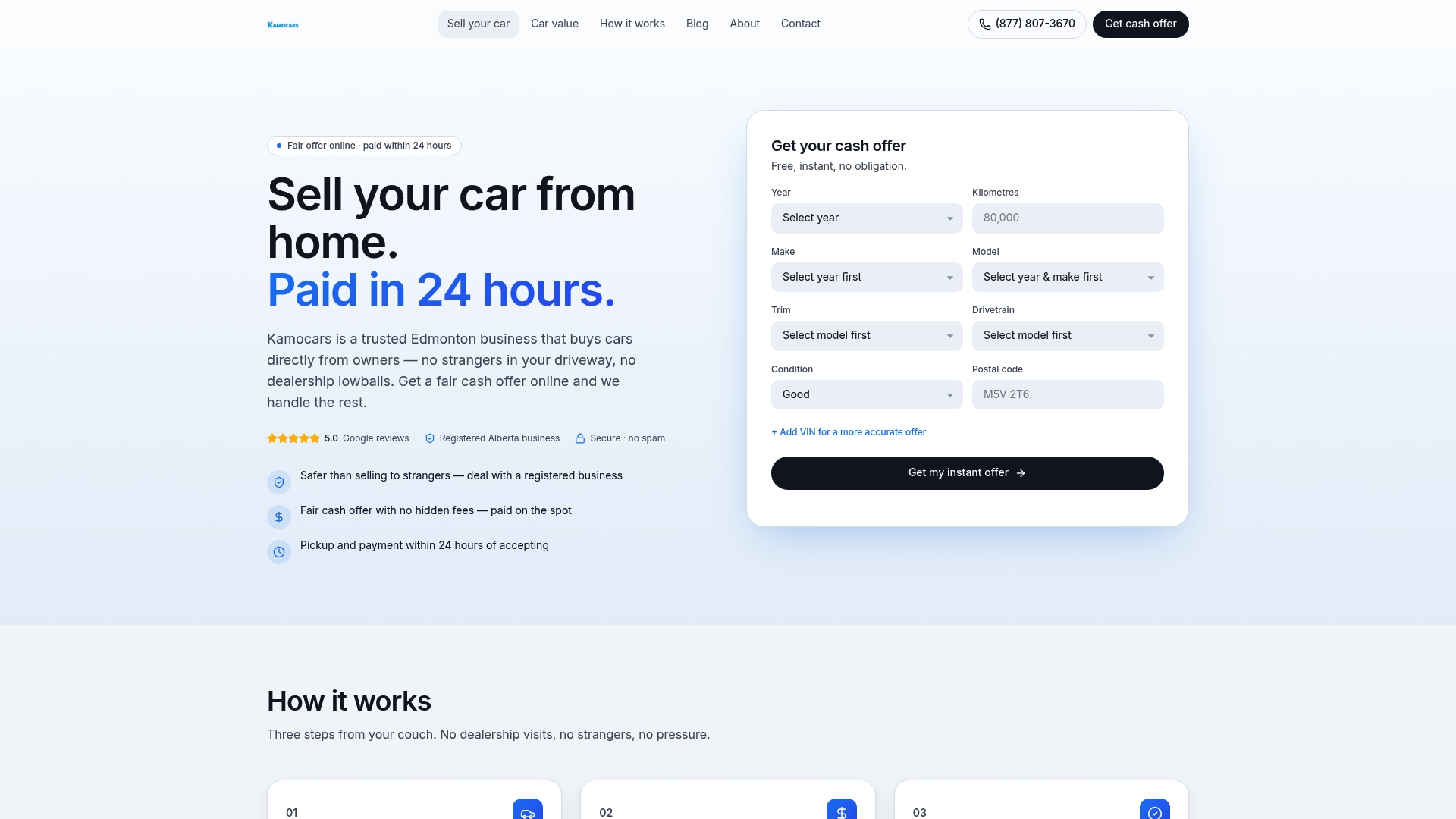
The process is direct: get an online appraisal based on current market data, receive a cash offer within 24 hours, and schedule a free pickup at your convenience. Sellkamocars handles the legal transfer paperwork so you do not have to. See how it works and get your offer today. If you are in Alberta, Sellkamocars also serves sellers in Edmonton with the same fast, transparent process.
FAQ
Why do car owners feel so much anxiety when selling?
52% of car owners report significant anxiety during vehicle transactions, more than during many other major life events. The combination of emotional attachment, financial uncertainty, and negotiation pressure creates a uniquely stressful experience.
What is the fastest way to sell a car with the least stress?
Using a registered online car buying service is the fastest low-stress option. These platforms provide market-based offers, handle paperwork, and complete payment within 24–48 hours, removing the three biggest friction points.
How long does a private car sale actually take?
Private sales typically require 8–15 hours of active effort spread over several weeks, including listing, screening buyers, test drives, and negotiation. That time investment is the main hidden cost of selling privately.
What paperwork do I need to sell my car legally?
Requirements vary by region, but most sellers need a signed bill of sale, title transfer documents, an odometer disclosure statement, and lien release paperwork if the car is financed. Check your local motor vehicle authority for the exact list.
Do dealerships deliberately make the selling process harder?
Dealerships use deliberate pacing tactics, including repeated breaks and manager consultations, to wear down seller resistance and close deals on their terms. This is a documented negotiation strategy, not coincidence.
Recommended
Get a real cash offer in 2 minutes
Trusted business. Fair price. Paid on the spot when we pick up your car.