
What Does Car Sale Completion Mean? 2026 Guide
Discover what car sale completion means. Learn about the vital steps for legally transferring vehicle ownership and protecting yourself.
What Does Car Sale Completion Mean? 2026 Guide

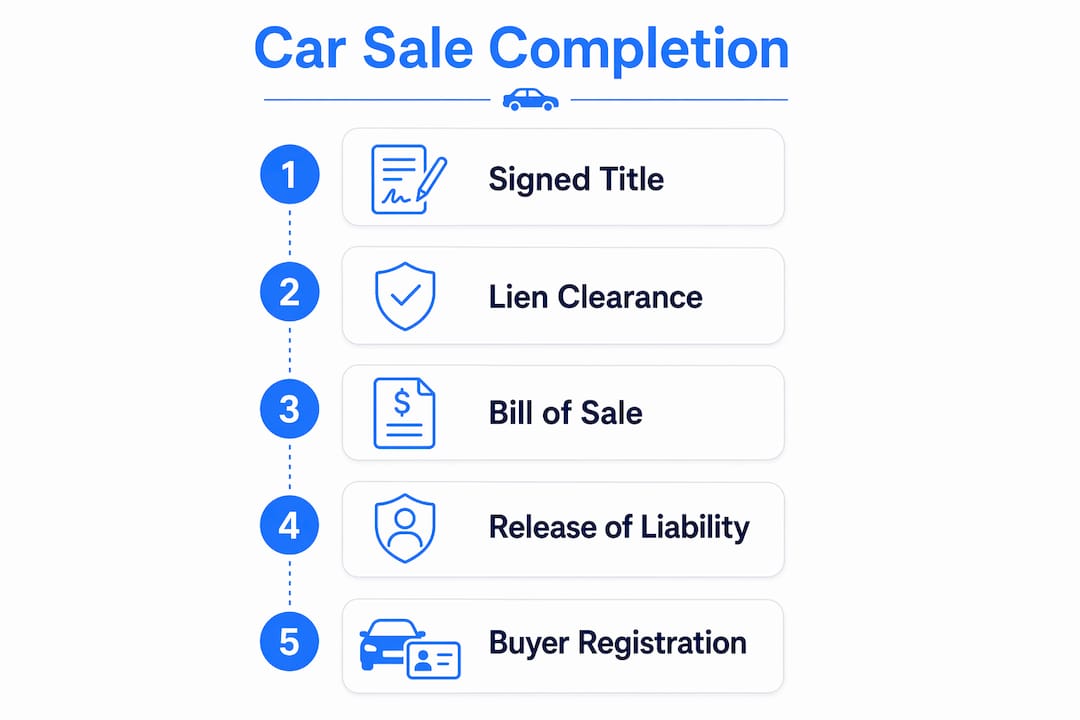
Car sale completion is defined as the moment legal ownership of a vehicle officially transfers from seller to buyer, which requires proper title assignment, lien clearance, and buyer registration with the state motor vehicle agency. Handing over the keys is not enough. The Uniform Commercial Code requires written evidence for sales of $500 or more, including a signed title, bill of sale, and release of liability. Until those documents are properly executed and filed, the sale is legally incomplete. Sellers who skip these steps remain exposed to liability for tickets, accidents, and registration fees that occur after the handoff.
What does car sale completion mean legally?
Car sale completion is the industry term for the full legal transfer of vehicle ownership, not just the physical exchange of keys and cash. The process is complete only when the title is properly assigned, any liens are cleared, and the buyer registers the vehicle with the appropriate motor vehicle agency. Title assignment is the single most critical step. A signed title with an accurate odometer reading is what legally moves ownership from one person to another.
Many sellers confuse physical possession with legal completion. Those are two separate events. A buyer can drive away with your car and still not be the legal owner if the title has not been properly signed and submitted. Until the state’s motor vehicle records reflect the new owner, the seller carries legal responsibility for that vehicle.
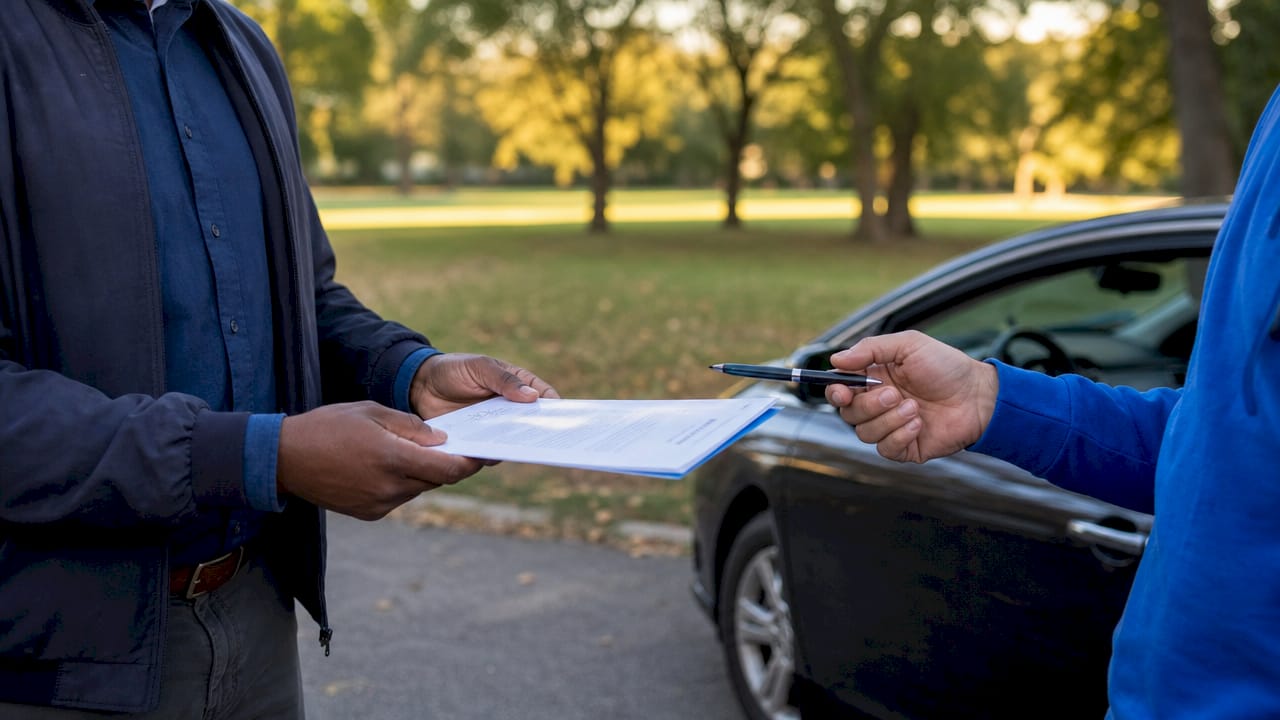
The release of liability is the seller’s primary protection after the handoff. Filing it with your state’s Department of Motor Vehicles or equivalent agency creates a timestamped record that you no longer own the vehicle. Without it, you can be held responsible for parking tickets, toll violations, and even accident claims that occur after the sale.
What documents are required to finalize a car sale?
Getting the paperwork right is the fastest way to protect yourself as a seller. Each document in a car sale serves a specific legal function. Here is what you need:
- Signed vehicle title. The title is the primary proof of ownership transfer. Both seller and buyer must sign it, and the odometer reading must be recorded accurately. The signed title with odometer reading is what legally transfers ownership, not the bill of sale.
- Bill of sale. This document records the transaction terms, including the vehicle’s make, model, VIN, condition, sale price, and date. A bill of sale is legally binding when signed by both parties with a date. It does not transfer ownership on its own, but it is critical evidence for tax purposes and dispute resolution.
- Release of liability. This form notifies your state agency that you have sold the vehicle. Filing it promptly after the sale cuts your legal exposure immediately.
- Lien release documents. If your vehicle has an outstanding loan, the lender must provide a lien release before the title can be transferred. Without this, the buyer cannot get a clean title.
- Odometer disclosure statement. Federal law requires sellers to disclose the vehicle’s mileage at the time of sale. Many states include this on the title itself, but some require a separate form.
Pro Tip: Keep signed copies of all documents for at least four years. That window covers most liability periods for post-sale incidents and gives you solid proof if a dispute arises.
Sixteen states mandate a bill of sale for vehicle registration, and 12 more strongly recommend it. Even if your state does not require one, having a signed bill of sale is one of the smartest moves you can make as a seller.
What are the common legal risks in completing a car sale?
Most problems in car sale finalization come from one core misconception: that handing over keys equals completion. Handing over keys does not complete legal ownership transfer. State record updating is required. Here are the most common risks sellers and buyers face:
- Failing to file a release of liability. Without this form, you remain legally tied to the vehicle. If the buyer gets a speeding ticket or causes an accident before registering the car, you could be named as the responsible party.
- Unresolved liens. An unresolved lien prevents title transfer entirely. If a buyer pays you directly without confirmation that the lien is cleared, they risk receiving an invalid title.
- Buyer delays in registration. The buyer’s failure to register the vehicle within the state-mandated window leaves the seller in legal limbo. Your name stays on the state’s records until the new owner completes registration.
- Inaccurate odometer disclosure. Sellers who record incorrect mileage face federal penalties. This is not a technicality. It is a federal requirement under the Truth in Mileage Act.
- Missing signatures. A title with incomplete signatures is invalid. Both parties must sign in the correct fields, and some states require a notary.
“Without filing a release of liability form, the seller remains legally liable for incidents involving the vehicle after the sale date, especially if the buyer delays registration.” — legalclarity.org
Timestamped photos of signed documents and the odometer reading protect both parties against disputes over sale terms and mileage. Take photos before the buyer drives away.
How to complete a car sale step by step
A clean car sale follows a clear sequence. Skipping steps creates legal gaps that can cost you money and time. Here is the process sellers and buyers should follow:
- Confirm lien payoff before the sale date. Contact your lender and get written confirmation that the loan is paid off and the lien is released. Confirming lien payoff before finalizing the sale is critical. Failure causes incomplete title transfer and potential legal penalties.
- Have both parties present to sign. The seller and buyer should sign the title and bill of sale together, in person. This eliminates disputes about who signed what and when.
- Record the odometer reading on the title. Write the exact mileage at the time of sale. Both parties should verify and acknowledge the number.
- File the release of liability the same day. Most states allow you to file online or by mail. Do it before the buyer leaves with the vehicle if possible.
- Give the buyer the signed title and bill of sale. The buyer needs these documents to register the vehicle. Without the signed title, registration is impossible.
- Buyer registers the vehicle within the state deadline. Each state sets its own window. Missing it results in late fees and can create registration complications.
- Both parties keep signed copies. Store your bill of sale, a copy of the signed title, and any lien release documents in a safe place.
Pro Tip: Take timestamped photos of the signed title, bill of sale, and odometer reading before the buyer leaves. This is industry best practice and your best defense if a dispute surfaces months later.
For sellers dealing with a financed vehicle, the lien clearance process adds extra steps but follows the same logic. Clear the debt, get the lien release, then transfer the title.
How do state-specific rules affect car sale completion?
Car sale completion requirements vary significantly by state. Deadlines, notarization rules, and required forms differ across jurisdictions. Sellers and buyers must check their local DMV or state motor vehicle agency for exact requirements.
| State | Title Transfer Deadline | Bill of Sale Required | Notarization Required |
|---|---|---|---|
| California | 10 days | Recommended | No |
| Texas | 30 days | Recommended | No |
| Michigan | 15 days | Yes | No |
| Louisiana | 40 days | Yes | Yes |
| Montana | 20 days | Yes | Yes |
Title transfer deadlines vary widely. Missing them results in late fees or invalid registration. California’s 10-day window is one of the strictest in the country. Texas gives buyers 30 days, which is more forgiving but still firm.
Michigan law is a useful reference point. Under Michigan law, sellers are not liable for violations that occur after the sale, provided they have proof of sale and completed title transfer efforts. That protection depends entirely on having the paperwork done correctly and on time.
The Uniform Commercial Code governs the overarching validity of vehicle sales across the country. It sets the baseline that written documentation is required for transactions of $500 or more. State laws then layer additional requirements on top of that baseline. Checking your state’s DMV website before the sale takes 10 minutes and prevents costly mistakes.
For sellers in Alberta, the vehicle registration transfer process follows provincial rules that differ from American state requirements. Know which jurisdiction applies to your sale.
Key Takeaways
Car sale completion requires signed title transfer, lien clearance, and buyer registration with the state motor vehicle agency. Handing over keys alone does not satisfy any of those legal requirements.
| Point | Details |
|---|---|
| Legal completion defined | Ownership transfers only when the title is signed, liens are cleared, and the buyer registers the vehicle. |
| Release of liability is critical | File it the same day as the sale to cut your legal exposure from tickets and accidents immediately. |
| Lien clearance comes first | Confirm lien payoff in writing before signing any documents or accepting payment. |
| State deadlines vary | California requires title transfer in 10 days; Texas allows 30 days; Michigan requires 15 days. |
| Documentation protects both parties | Keep signed copies of the title, bill of sale, and lien release for at least four years. |
Why sellers underestimate car sale completion
The most expensive mistake I see sellers make is treating the key handoff as the finish line. It is not. The finish line is the moment the state’s motor vehicle records show a new owner. Everything before that is just progress toward completion.
I have seen sellers get hit with parking tickets and toll violations months after a sale because the buyer never registered the vehicle. The seller’s name was still on the state records, so the fines went to them. Filing a release of liability the same day as the sale would have prevented every one of those situations.
The other pattern I see constantly is sellers with unresolved liens trying to rush through the paperwork. A buyer who pays without lien payoff confirmation is taking a serious risk. The title they receive may be legally invalid. That creates a dispute that can drag on for months and sometimes ends in court.
My practical advice: treat the paperwork as the actual product you are selling. The car is just the reason you are doing it. A clean, complete set of documents is what protects you after the buyer drives away. Follow up with the buyer until you have confirmation that registration is complete. That follow-up takes one text message and saves you from months of potential headaches.
— Omar
Sellkamocars handles the paperwork so you do not have to
Completing a car sale correctly requires attention to title transfer, lien clearance, and release of liability. For many sellers, that process is time-consuming and easy to get wrong.
Sellkamocars manages every step of the car sale process for sellers in Edmonton, including title handling, lien clearance, and documentation. You get a fair cash offer based on current market data, free pickup, and payment within 24 hours. With over 500 completed transactions, Sellkamocars has the process down to a science. If you want to sell your car in Edmonton without worrying about paperwork, Sellkamocars is the direct path to a legally clean, fast sale.
FAQ
What does car sale completion mean?
Car sale completion is the legal transfer of vehicle ownership from seller to buyer, which occurs when the title is properly signed, any liens are cleared, and the buyer registers the vehicle with the state motor vehicle agency.
Does handing over keys complete a car sale?
No. Handing over keys does not complete legal ownership transfer. State record updating through title assignment and buyer registration is required for the sale to be legally finalized.
What paperwork do I need to complete a car sale?
You need a signed vehicle title with odometer disclosure, a bill of sale, a release of liability, and a lien release if the vehicle has an outstanding loan. Sixteen states require a bill of sale for registration.
How long does a buyer have to transfer the title?
Deadlines vary by state. California requires title transfer within 10 days, Michigan within 15 days, and Texas within 30 days. Missing the deadline results in late fees and registration complications.
What happens if I do not file a release of liability?
Without a release of liability, you remain legally responsible for the vehicle after the sale. That includes tickets, toll violations, and accident claims that occur before the buyer registers the car in their name.
Recommended
Get a real cash offer in 2 minutes
Trusted business. Fair price. Paid on the spot when we pick up your car.