
Why Dealers Lowball Car Valuations: A 2026 Guide
Discover why dealers lowball car valuations and learn how to navigate trade-in appraisals effectively to maximize your vehicle's worth.
Why Dealers Lowball Car Valuations: A 2026 Guide
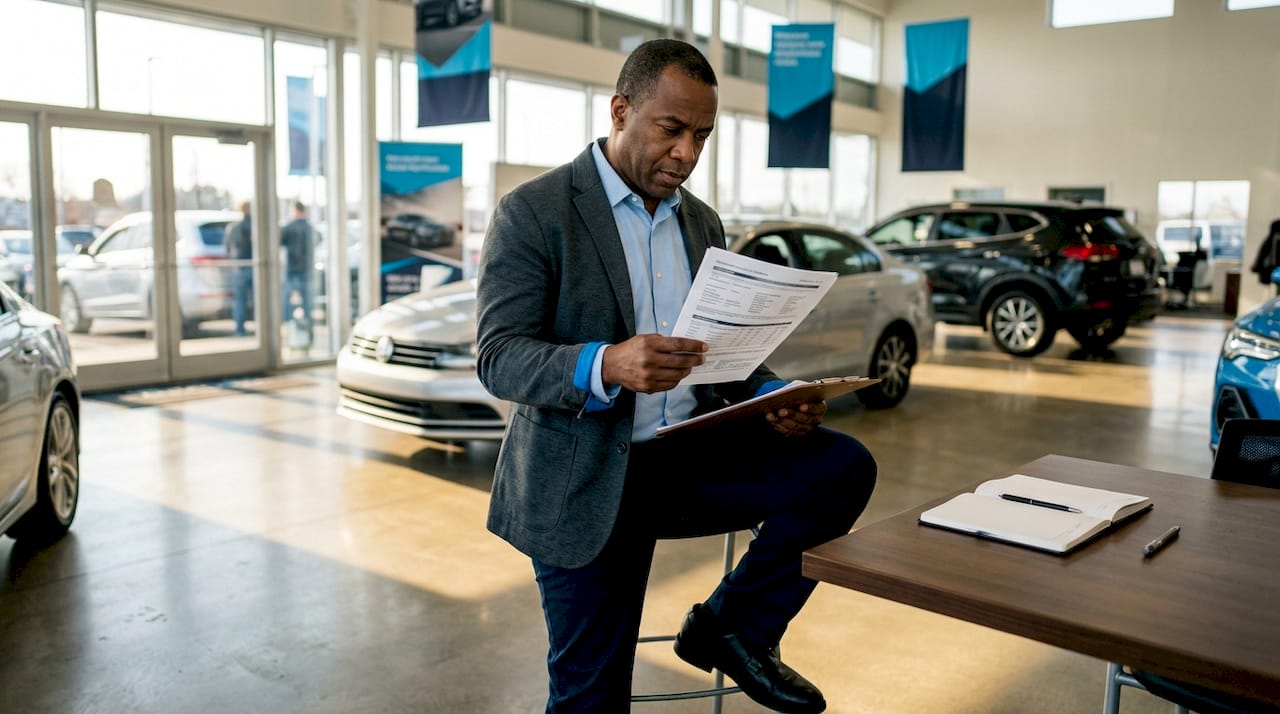
Dealerships lowball car valuations primarily to protect their profit margins, not because your vehicle lacks value. Understanding why dealers lowball car valuations requires looking at how trade-in appraisals actually work: dealers base offers on wholesale market prices, reconditioning costs, and inventory turnover goals rather than the retail figures you see online. 28–35% of failed dealership transactions stem from disagreements over trade-in values. That number tells you this problem is widespread and structural, not personal.
Why dealers lowball car valuations: the math behind the offer
The industry term for what dealers use is Actual Cash Value, or ACV. ACV is the wholesale price a vehicle would fetch at auction today, not what a private buyer would pay next month. Dealers build their offers around ACV because that is their real exit price if the vehicle does not sell on their lot within their target window.
Franchised dealers target 8–12% gross margin on used vehicles. That margin must cover reconditioning, floor-plan interest, advertising, and sales commissions before a dollar of profit appears. So dealers typically offer 75–85% of a vehicle’s wholesale value to leave room for all those costs plus their margin target.
Here is what gets factored into a dealer’s appraisal before they hand you a number:
- Reconditioning costs: Detailing, mechanical repairs, new tires, and safety certifications can run $1,000–$3,000 on a typical used vehicle.
- Floor-plan interest: Dealers borrow money to hold inventory. Every day a car sits on the lot costs them interest.
- Auction risk: Dealers appraise based on a 45–60 day inventory turnover goal. If the car does not sell in that window, it goes to auction at a loss.
- Market softening buffer: Dealers discount for the possibility that used car prices drop between today and the sale date.
Pro Tip: Ask the dealer to show you the reconditioning estimate in writing. Dealers sometimes inflate these figures to justify lower offers, and a written breakdown gives you a starting point for negotiation.
In Canadian HST provinces, there is also a tax credit on trade-ins that reduces the taxable amount on your new purchase. This credit quietly improves the economics of trading in versus selling privately, but most sellers never factor it into their comparison.
What motivates dealers to go even lower than the math requires
Pure valuation math explains part of the gap. Dealer psychology and negotiation tactics explain the rest.
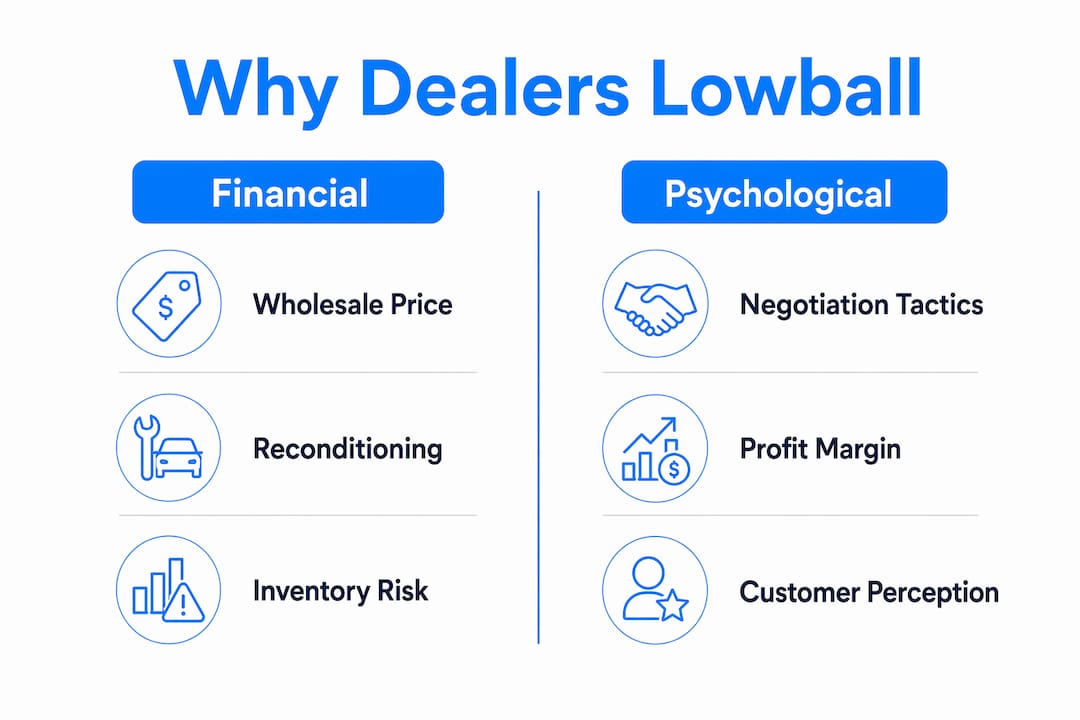
The most common tactic is called “packing the deal.” A $2,000 bump to your trade-in allowance is matched by a $2,000 reduction in the discount on the new car. The total deal profit stays identical. You feel like you won on the trade-in, but the dealer simply moved the margin to a different line item.
Dealers also use information asymmetry as a tool. Salespeople quickly gauge your knowledge level and adjust their offer accordingly. Sellers who walk in without research tend to receive lower offers. Sellers who reference auction data and documented competing quotes get treated differently.
Dealers use proprietary software pulling live data from Manheim, Copart, and Canadian Black Book. These platforms show wholesale auction prices, which are consistently lower than the retail estimates on consumer sites like Kelley Blue Book or Edmunds. When a dealer says “the market says your car is worth X,” they mean the wholesale market, not the retail one you are thinking of.
Inventory management adds another layer. A dealer who already has six similar vehicles on the lot has no incentive to offer you a fair price on a seventh. Their appraisal reflects their current inventory position as much as your vehicle’s condition. Longer holding costs reduce offers to protect the dealer’s resale margin on a vehicle they may not need right now.
Common myths about trade-in pricing that cause frustration
Most sellers walk into a dealership with a number from an online tool and leave feeling cheated. The gap between those two numbers is real, but it is not always dishonest. Understanding why closes the frustration gap.
Myth 1: Online valuations reflect what dealers will pay. Kelley Blue Book and Edmunds show retail or private-party values. Dealers use proprietary wholesale data from Manheim and Canadian Black Book, which runs lower. The tools are measuring different markets entirely.
Myth 2: Waiting to reveal your trade-in gives you leverage. Negotiating the new car price first, then introducing your trade-in, often backfires. Dealers offset lost margin by lowballing the trade-in further once the new car discount is locked in. The total deal profit rarely changes.
Myth 3: A low offer means your car is in bad condition. Condition affects value, but it is not the only factor. Inventory levels, local market demand, and the dealer’s current cash position all influence the number. A well-maintained vehicle can still receive a low offer if the dealer simply does not want that model right now. You can learn more about how condition affects offers and what actually moves the needle.
Myth 4: Negative equity is the dealer’s problem. About 30% of trade-ins carry negative equity because extended loan terms let depreciation outpace payments. Dealers roll that shortfall into the new loan, which increases your monthly payment and total cost. The trade-in offer does not change. Your debt load does.
Pro Tip: Get your loan payoff amount from your lender before any dealer conversation. Knowing your exact equity position prevents the dealer from using your uncertainty as leverage.
How to get a better offer or find a smarter alternative
Knowledge is the most effective negotiating tool you have. Here is how to use it.
-
Research wholesale prices before you go. Manheim and ADESA publish auction results. Canadian Black Book offers free estimates online. Walk in knowing the wholesale range for your vehicle, not just the retail estimate.
-
Get multiple written offers. Documented competing quotes force dealers to compete. A written offer from one buyer changes the conversation with every other buyer. This is the single most effective tactic for closing the gap between ACV and a fair offer.
-
Negotiate the total deal price, not individual components. Ask for the “out-the-door” number. This prevents dealers from moving margin between the trade-in allowance, new car discount, and financing terms without your awareness.
-
Understand your tax position. In HST provinces, trading in reduces the tax base on your new purchase. That tax saving can be worth several hundred dollars and should factor into your comparison between trading in and selling privately.
-
Consider selling outside the dealership. Private sales typically return more money but require time, safety considerations, and handling strangers. Online car-buying services offer a middle path: fair market offers, no negotiation, and fast payment. Reviewing your selling options side by side helps you choose based on your actual priorities.
The types of fair car valuations available to sellers have expanded significantly. You are no longer limited to accepting whatever a single dealer offers on a Tuesday afternoon.
| Selling method | Typical value received | Time required | Negotiation required |
|---|---|---|---|
| Dealer trade-in | 75–85% of wholesale ACV | Same day | Yes |
| Private sale | Closer to retail value | Weeks to months | Yes |
| Online car-buying service | Near wholesale to fair market | 24–48 hours | No |
Key takeaways
Dealers lowball car valuations because their offers are built on wholesale prices, reconditioning costs, and inventory risk, not the retail figures sellers expect.
| Point | Details |
|---|---|
| ACV drives dealer offers | Dealers price from wholesale Actual Cash Value, not retail or private-party estimates. |
| Margin targets shrink offers | An 8–12% gross margin target means dealers offer 75–85% of wholesale value on average. |
| Dealer tactics move the margin | Trade-in bumps are often offset by cuts to new-car discounts, keeping total profit constant. |
| Negative equity complicates deals | 30% of trade-ins carry negative equity, which rolls into new loans and increases total cost. |
| Multiple offers change outcomes | Documented competing quotes force dealers to compete and close the gap on lowball offers. |
What I’ve learned watching sellers walk away from money
I have seen the same pattern repeat itself more times than I can count. A seller walks in with a number from an online tool, the dealer offers $3,000 less, and the seller either accepts out of exhaustion or walks away convinced the dealer is dishonest. Neither outcome serves the seller well.
The uncomfortable truth is that most dealers are not lying when they explain their appraisal. They are telling you the truth about their costs and their market. The problem is that their market is not your market. Wholesale auction prices and retail selling prices are genuinely different numbers, and no amount of frustration changes that math.
What does change the outcome is preparation. Sellers who arrive with written competing offers, a clear understanding of their loan payoff, and knowledge of the wholesale range for their vehicle consistently get better results. Not because dealers suddenly become generous, but because informed sellers remove the information asymmetry that makes lowball offers possible.
The other mistake I see constantly is sellers negotiating the trade-in and new car price as separate battles. Dealers see the whole deal as one number. You should too. Focus on the total cost, not the individual line items, and you will stop being surprised by how the margin moves around.
— Omar
A faster, fairer way to sell your car in Alberta
If you have walked away from a dealer offer feeling shortchanged, you are not alone. Sellkamocars was built specifically for sellers who want a fair, transparent number without the back-and-forth of a dealership negotiation.
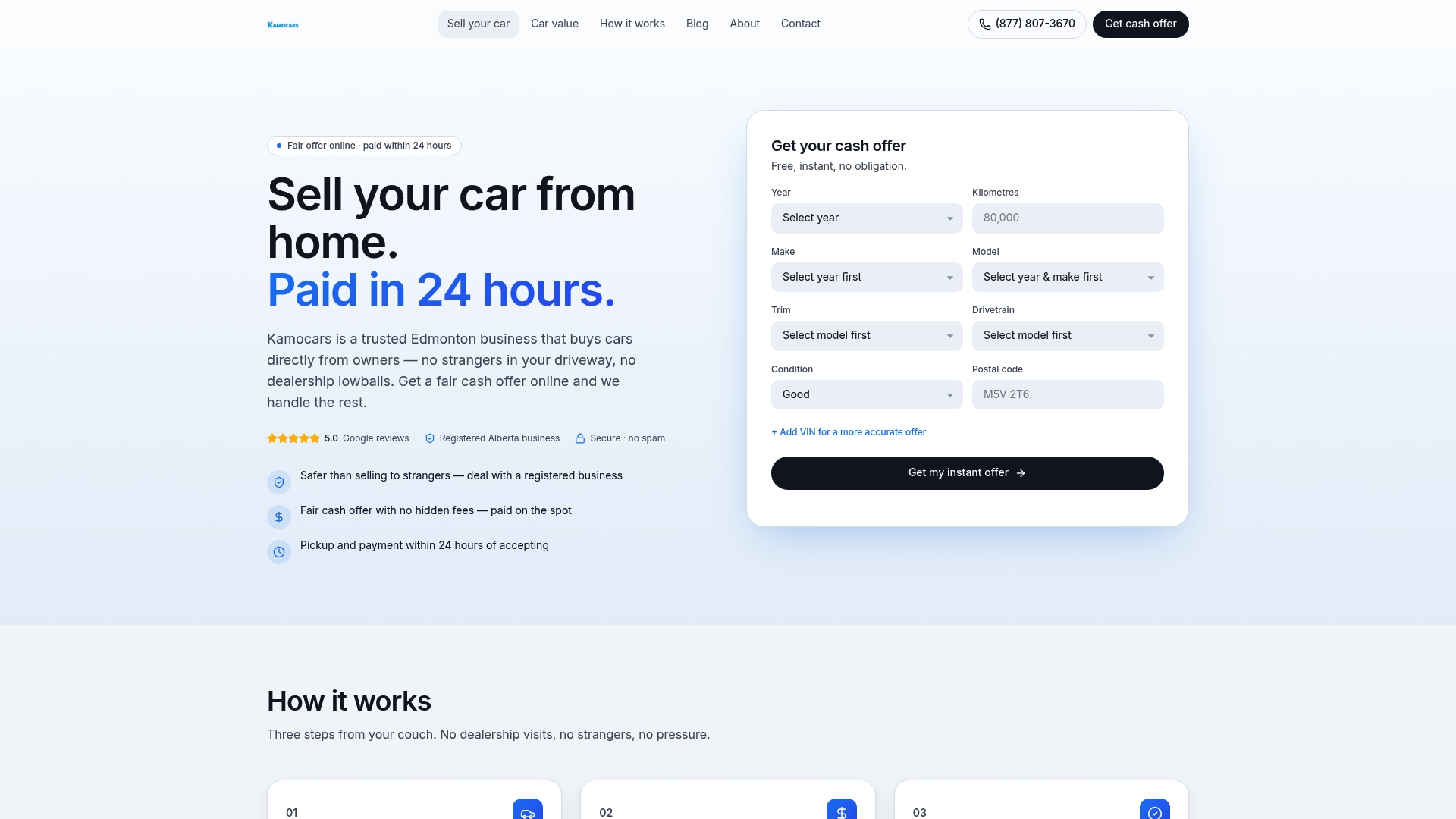
Sellkamocars bases every offer on current market data, not a dealer’s inventory position or margin target. The process is straightforward: get your offer online, schedule a pickup, and receive payment within 24 hours. There are no hidden fees, no reconditioning deductions sprung on you at the last minute, and no strangers showing up at your home. With over 500 completed transactions, Sellkamocars has built a track record that informal platforms cannot match. Start with the free Alberta car value tool to see what your vehicle is actually worth, then see how it works to compare it against any dealer offer you have received.
FAQ
Why is a dealer’s trade-in offer lower than online estimates?
Online tools like Kelley Blue Book show retail or private-party values. Dealers appraise vehicles using wholesale auction data from sources like Manheim and Canadian Black Book, which consistently shows lower prices because it reflects what dealers actually pay at auction.
What is Actual Cash Value in a dealer trade-in?
Actual Cash Value (ACV) is the wholesale price a vehicle would sell for at auction today. Dealers base trade-in offers on ACV rather than retail value because ACV represents their real cost floor if the vehicle does not sell on their lot.
How do dealers use reconditioning costs to lower trade-in offers?
Dealers estimate the cost to repair, detail, and certify a vehicle before resale, then subtract that figure from the ACV. Dealers sometimes inflate reconditioning estimates beyond actual costs, which reduces the offer while increasing their eventual resale margin.
Does negative equity affect my trade-in offer?
Negative equity does not lower the trade-in offer itself, but it does increase your total cost. About 30% of trade-ins carry negative equity, and dealers roll that shortfall into the new loan, raising your monthly payment.
What is the best way to avoid dealer undervaluation?
Get at least two or three written offers before visiting a dealership. Documented competing quotes remove the information asymmetry dealers rely on and force more competitive appraisals. Knowing your loan payoff amount and the wholesale range for your vehicle strengthens your position further.
Recommended
Get a real cash offer in 2 minutes
Trusted business. Fair price. Paid on the spot when we pick up your car.