
Doorstep Vehicle Collection: What Vehicle Owners Need to Know
Discover what doorstep vehicle collection is and how it offers unmatched convenience, protection, and peace of mind for vehicle owners.
Doorstep Vehicle Collection: What Vehicle Owners Need to Know
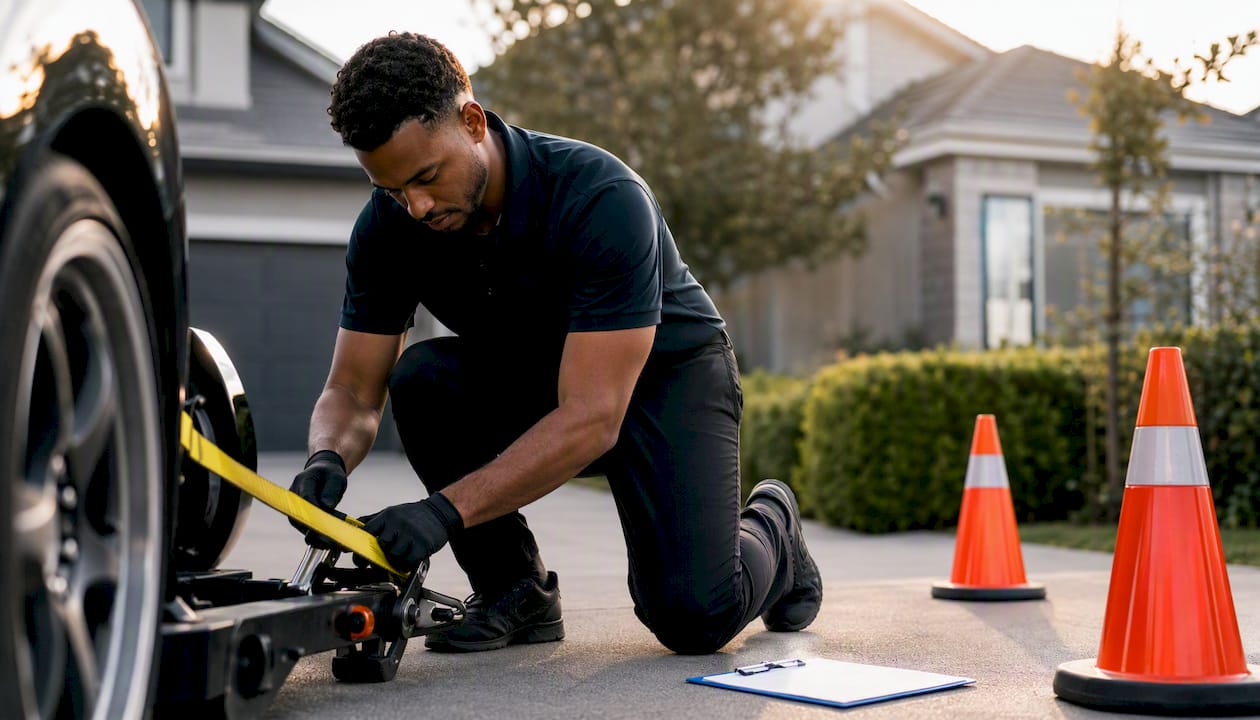
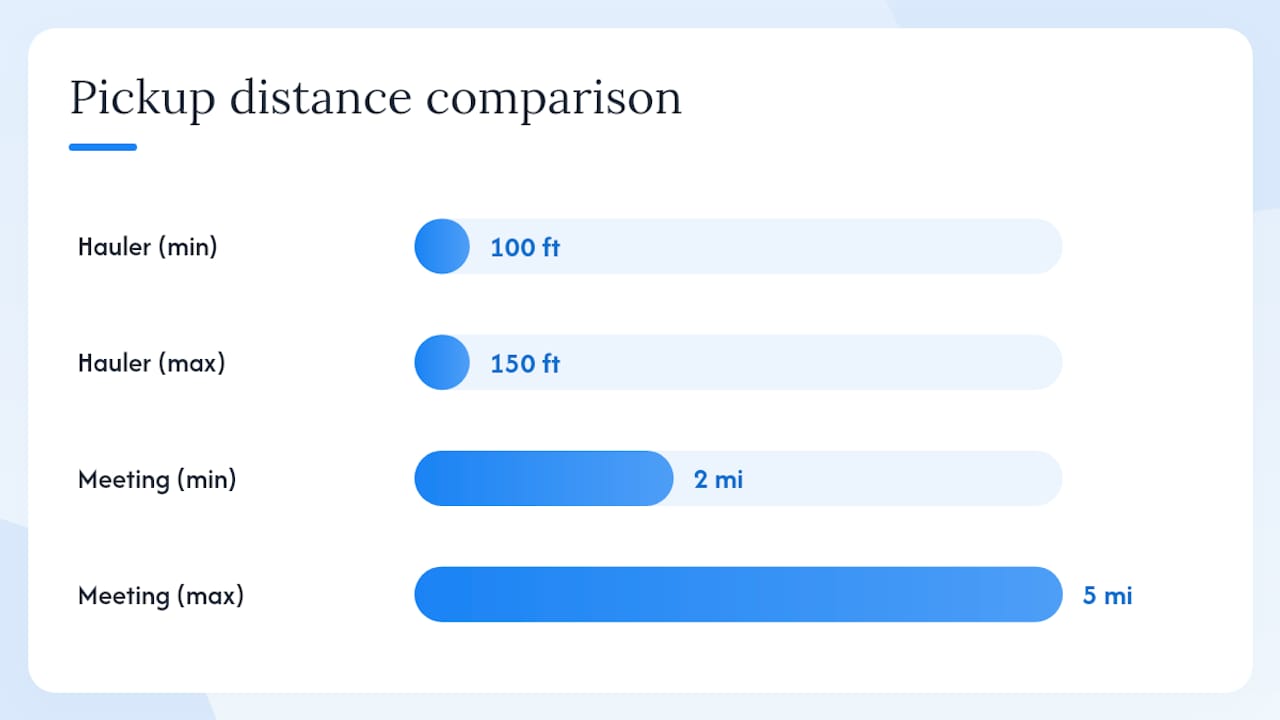
Doorstep vehicle collection, also called door-to-door auto transport, is a service where a carrier picks up your vehicle from a specified address and delivers it as close to the destination as safely and legally possible. You get three practical expectations from the start: genuine convenience (no trips to a distant shipping terminal), likely proximity limits (large car haulers need 100–150 feet of clearance, so your exact driveway may not work), and mandatory paperwork at both pickup and delivery.
- Convenience: No terminal drop-off, no arranging a ride back home.
- Proximity limits: Your street, driveway, or building access may require a nearby meeting point.
- Documentation: A signed Bill of Lading and vehicle inspection report protect you if damage occurs in transit.
Pro Tip: Before the driver arrives, photograph every panel, the interior, and all four tires with your phone’s timestamp on. Hand nothing over until both you and the driver have signed the inspection report.
Table of Contents
- How does doorstep vehicle collection work, step by step?
- Dealer pickup for service vs. commercial door-to-door transport
- Why your carrier can’t always reach your front door
- What paperwork and insurance actually protect you
- What affects the cost and timeline of vehicle collection
- How to get your vehicle ready for pickup
- How to choose a reputable carrier and avoid scams
- What the research says about door-to-door pickup realities
- Key Takeaways
- The part most guides skip about doorstep pickup
- Sell your car from home with Sellkamocars
- Useful sources
How does doorstep vehicle collection work, step by step?
The car collection process follows a predictable sequence. Knowing each step tells you exactly when to pay attention and when to sign.
- Get a quote and book. Request vehicle collection quotes online or by phone. Provide your pickup and delivery addresses, vehicle details, and preferred dates. Confirm whether the provider is a carrier (owns the trucks) or a broker (arranges transport through carriers).
- Schedule a pickup window. Most services offer a 1–7 day scheduling window. Confirm your address access and share any restrictions (gate codes, low branches, narrow lanes).
- Driver inspection and Bill of Lading at pickup. The driver walks around the vehicle with you, notes pre-existing damage on the condition report, and both parties sign the Bill of Lading. This document is your primary legal record for any insurance claim.
- Transit with tracking updates. Reputable carriers provide ETA updates and a contact number. Auction-specific pickup services, for example, often advertise flexible scheduling and proactive driver communication throughout transit.
- Signed delivery inspection and handoff. At delivery, inspect the vehicle again before signing the Bill of Lading. Note any new damage immediately in writing on the form.
Your checklist at pickup:
- Keys and a spare if available
- Proof of ownership (title or registration)
- Clear location instructions and gate codes
- Your contact number for driver updates
- Signed inspection report before the driver leaves
The FMCSA identifies the Bill of Lading as the carrier’s legal responsibility document. Without a signed copy, your claim options shrink considerably.
Dealer pickup for service vs. commercial door-to-door transport
These are two different services that share a name. Mixing them up leads to wrong expectations about cost, coverage, and who arranges what.
Dealership pickup programs like Ford Pickup & Delivery and Mopar at-home pickup and drop-off are typically complimentary for participating dealers. Ford’s program sends a dealer representative to collect your vehicle for a service appointment and return it when the work is done. Mopar adds disinfecting and contactless procedures. Neither program covers parts or repair costs, and both are limited by dealer availability and distance.
Commercial door-to-door auto transport is what most people mean when they search for doorstep vehicle collection. A transport carrier or broker moves your vehicle between cities, states, or across the country. You pay for the service, and the price reflects distance, vehicle size, and access difficulty.
| Dealership pickup (Ford, Mopar) | Commercial carrier transport | |
|---|---|---|
| Best for | Local service appointments | Shipping, relocation, buying/selling |
| Who pays | Usually complimentary | You (the vehicle owner) |
| Coverage | Pickup/dropoff only, not repairs | Transit only, not pre-existing damage |
| Access limits | Dealer distance restrictions | Truck clearance and local road rules |
| Tracking | Dealer contact | Carrier ETA updates |
Pro Tip: If you’re scheduling a service pickup through your dealer, confirm participation before assuming it’s available. Not every Ford or Mopar dealer offers the program in every area.
Why your carrier can’t always reach your front door
Door-to-door auto transport means the carrier gets as close to your address as safely and legally possible. That phrase does real work. Large car haulers need 100–150 feet of clear space to load and unload, and residential streets rarely offer that.
Common obstacles that prevent literal doorstep pickup:
- Narrow or one-way streets that a multi-car hauler can’t navigate
- Low-hanging branches or overhead power lines
- Weight-restricted bridges or roads near your home
- Gated communities with height or length barriers
- Steep or winding driveways
- On-site parking rules that prohibit commercial vehicles
When direct access isn’t possible, drivers typically ask you to meet within 2–5 miles at a parking lot or wide side street. This is standard practice, not a service failure.
Pro Tip: Scout a nearby big-box store parking lot or wide commercial street before pickup day. Share the address with your driver in advance so they can confirm it works for their rig. That five-minute task eliminates the most common day-of delay.
What paperwork and insurance actually protect you
Documentation is where most transport disputes are won or lost. Have these ready and signed before the driver leaves your driveway.
At pickup, collect and sign:
- Bill of Lading (BOL) noting all pre-existing damage
- Vehicle condition report / inspection sheet
- Odometer reading confirmation
- Proof of ownership or ID verification
- Keys transfer note
At delivery, before you sign anything:
- Inspect every panel, the undercarriage, and glass in daylight
- Note any new damage directly on the delivery BOL
- Photograph damage with timestamps before moving the vehicle
If damage occurs, the claims flow works like this:
- Immediate timestamped photos at delivery
- Signed delivery BOL with damage noted
- Contact the carrier (not just the broker) and file a claim through their insurance
- Reference FMCSA carrier responsibility guidance if the carrier disputes liability
The distinction between carrier and broker matters here. A broker arranges transport but does not own the truck. The carrier’s insurance policy covers transit damage. Always get the carrier’s insurance policy number before your vehicle leaves.
Pro Tip: Email yourself photos and scanned BOL copies immediately after pickup. A timestamped email in your inbox is harder to dispute than a file on your phone with no metadata trail.
What affects the cost and timeline of vehicle collection
Door-to-door service costs more than terminal-to-terminal shipping because of the added convenience and the extra time drivers spend navigating residential areas. That premium is real, and it varies by several factors.
Cost drivers:
- Distance between pickup and delivery addresses
- Vehicle size and weight (oversized trucks or SUVs cost more)
- Pickup and dropoff access difficulty
- Service level (door-to-door vs. terminal drop-off)
- Seasonal demand and route popularity
- Open vs. enclosed transport
Timeline expectations:
- Online quotes: available instantly on most platforms
- Pickup scheduling: typically 1–7 days after booking, depending on route demand
- Transit time: shorter for regional moves, longer for cross-country routes
- Dealer service pickup: usually same-day or next-day for participating dealers
Door-to-door transport is consistently described as the most convenient method, but city restrictions and residential access can add time and cost that terminal shipping avoids. If your budget is tight, compare both options before committing.
How to get your vehicle ready for pickup
A well-prepared vehicle moves through the pickup process faster and creates a cleaner paper trail if anything goes wrong. Follow this checklist before the driver arrives.
- Remove all personal belongings, including items in the trunk and glove box
- Disable any aftermarket alarm systems and leave instructions if the alarm can’t be fully disabled
- Leave roughly a quarter tank of fuel (enough to load and unload, not enough to add weight)
- Check tire pressure and battery charge so the vehicle can be driven onto the hauler
- Secure or remove any loose exterior parts (antennas, spoilers, custom mirrors)
- Prepare two sets of keys and all required paperwork
- Note and photograph every existing scratch, dent, or chip before the driver arrives
For access, clear your driveway of other vehicles, trim any low branches that could scrape the hauler, and identify where the truck can wait without blocking traffic or violating local parking rules. A hassle-free sale checklist covers similar prep steps for sellers going through a home pickup process.
Pro Tip: Take a short video walk-around of the vehicle, not just photos. A video captures panel transitions and lighting angles that still photos sometimes miss, and it’s harder to dispute in a claim.
How to choose a reputable carrier and avoid scams
The vehicle pickup service industry has legitimate providers and bad actors. Asking the right questions upfront separates them quickly.
Ask every provider before booking:
- Are you the carrier or a broker?
- What is your insurance policy number and coverage amount?
- Will I receive a signed Bill of Lading at pickup?
- What tracking or ETA updates do you provide during transit?
- What payment method do you accept, and what are your deposit and refund terms?
Red flags to walk away from:
- Requests for large upfront wire transfers before pickup
- No signed paperwork offered at pickup
- No verifiable insurance or a refusal to share the policy number
- Driver pressure to sign an incomplete or blank BOL
- Vague or shifting pickup and delivery details
Checking a carrier’s profile on the BBB or similar consumer-reporting sites gives you verified complaint history and response patterns. A carrier with a clean record and documented responses to past complaints is a far safer choice than one with no online presence at all.
Pro Tip: Prefer payment through a company-guaranteed method or escrow over wire transfers. Never release your keys until you have a signed BOL in hand. Document every conversation with the carrier or broker in writing, even if it’s just a follow-up email summarizing a phone call.
For a broader look at how car buying services operate and what to expect from a reputable provider, the how car buying services work guide covers the key trust signals worth checking.
What the research says about door-to-door pickup realities
The phrase “doorstep vehicle collection” sets an expectation that the industry often qualifies in practice. Three realities from authoritative sources are worth knowing before you book.
Space requirements are non-negotiable. Montway Auto Transport reports that large car haulers typically require 100–150 feet of clear space to load and unload. Most residential driveways and suburban streets don’t meet that standard. Drivers will get as close as safely possible, but the 2–5 mile meeting-point workaround described by residential pickup specialists is a routine part of the service, not an exception.
The signed inspection is your only real protection. The FMCSA is clear that carriers bear documented responsibility for transit damage, but that responsibility is only enforceable when both parties have signed a condition report at pickup and delivery. A verbal agreement or an unsigned form leaves you with no paper trail.
| Use case | Typical access situation | Key consideration |
|---|---|---|
| Relocation (cross-country) | Often requires nearby meeting point | Plan for 2–5 mile alternative |
| Dealer service pickup | Dealer-arranged, local only | Confirm dealer participation first |
| Auction vehicle pickup | Flexible scheduling, experienced drivers | Confirm nationwide coverage and BOL process |
Auction-specific services like those described by Quintana Transport Services highlight nationwide availability and flexible scheduling as core features, which illustrates how commercial pickup logistics adapt to non-residential settings where access is less of a constraint.
Pro Tip: For any pickup involving a vehicle you’re selling or buying remotely, read the car sale done remotely guide before scheduling. It covers the documentation steps that protect you on both ends of the transaction.
Key Takeaways
Doorstep vehicle collection means door-to-door pickup as close to your address as safely possible, with a signed Bill of Lading and inspection report as your only enforceable protection against transit damage.
| Point | Details |
|---|---|
| Definition and limits | Door-to-door transport picks up at your address or within 2–5 miles when truck access is restricted. |
| Bill of Lading is critical | Sign it at pickup and delivery; it’s your only enforceable document for transit damage claims. |
| Dealer vs. commercial pickup | Dealer programs (Ford, Mopar) are typically complimentary for service; commercial transport is a paid, separate service. |
| Cost and timeline | Door-to-door costs more than terminal shipping; pickup scheduling typically runs 1–7 days after booking. |
| Sellkamocars pickup process | Sellkamocars handles home pickup with a documented inspection process and payment within 24 hours for Alberta sellers. |
The part most guides skip about doorstep pickup
Most articles on this topic spend their energy explaining what door-to-door transport is. Few spend enough time on what it isn’t, and that gap costs people money.
The signed Bill of Lading is treated as a formality in most how-to content. In practice, it’s the only document that matters when something goes wrong. Carriers know this. A driver who rushes you past the inspection or hands you a form to sign before the walk-around is not cutting corners out of laziness. That behavior removes your ability to file a supported claim. The FMCSA framework exists precisely because this pattern is common enough to warrant federal guidance.
The second thing most guides underplay is the carrier-versus-broker distinction. A broker can offer you a competitive quote and then assign your vehicle to a carrier you’ve never vetted. Your contract is with the broker; the insurance is with the carrier. When damage happens, that gap creates real friction. Ask for the carrier’s name and insurance details before your vehicle moves, not after.
Doorstep pickup is genuinely convenient when it’s done right. The documentation steps aren’t bureaucratic overhead. They’re the mechanism that makes the convenience worth trusting.
Sell your car from home with Sellkamocars
Skip the terminal, the haggling, and the waiting. Sellkamocars gives Alberta vehicle owners an instant cash offer based on current wholesale data, then handles the home pickup and payment within 24 hours. The process follows the same documented inspection and Bill of Lading workflow this article covers, so you’re protected at every step.
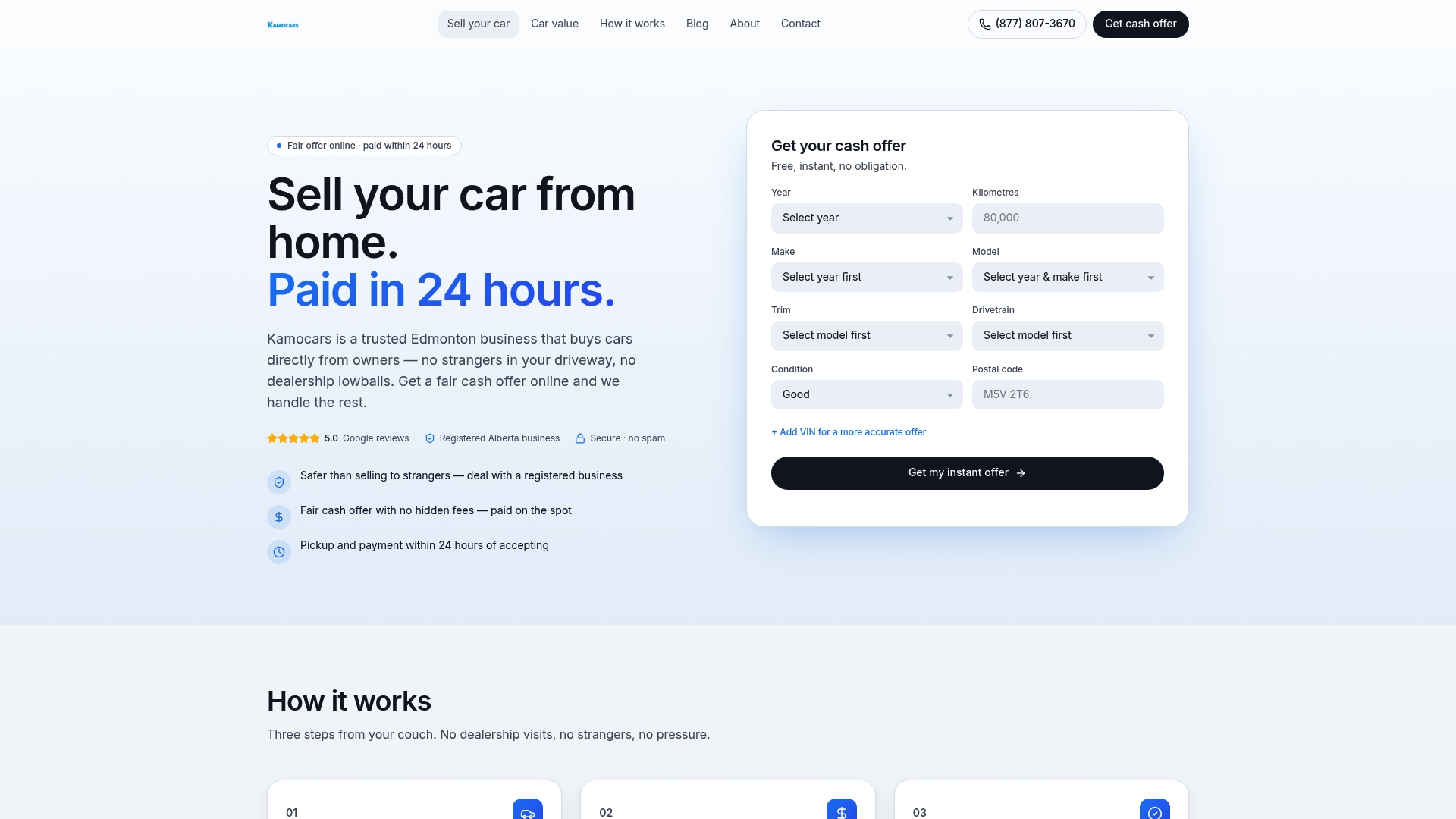
No strangers at your door, no dealership lowball, no back-and-forth. Sellkamocars has completed over 500 transactions with a straightforward model: you get a fair offer, a scheduled pickup at your home, and payment on the same day. If you’re ready to sell a 2018 or newer car, truck, or SUV in running condition, get your instant cash offer and schedule your pickup today.
Useful sources
- Door-To-Door Auto Transport Services | Montway Auto Transport
- Federal Motor Carrier Safety Administration (FMCSA)
- Residential vehicle pickup service explained
- Door-To-Door Auto Transport Explained | Montway Auto Transport
- Ford Pickup & Delivery | Schedule Your Service Today | Ford Owner Support
- Vehicle Pickup & Drop Off Service | Official Mopar® Site
- Vehicle Pickup and Delivery Service for Auction Auto Purchases – Fast & Hassle-Free
- Montway Auto Transport BBB profile
Recommended
Get a real cash offer in 2 minutes
Trusted business. Fair price. Paid on the spot when we pick up your car.