
Hassle Free Car Sale Checklist: 10 Steps to Sell Fast
Follow this hassle free car sale checklist to sell your vehicle swiftly and securely. Get step-by-step guidance and protect yourself legally.
Hassle Free Car Sale Checklist: 10 Steps to Sell Fast
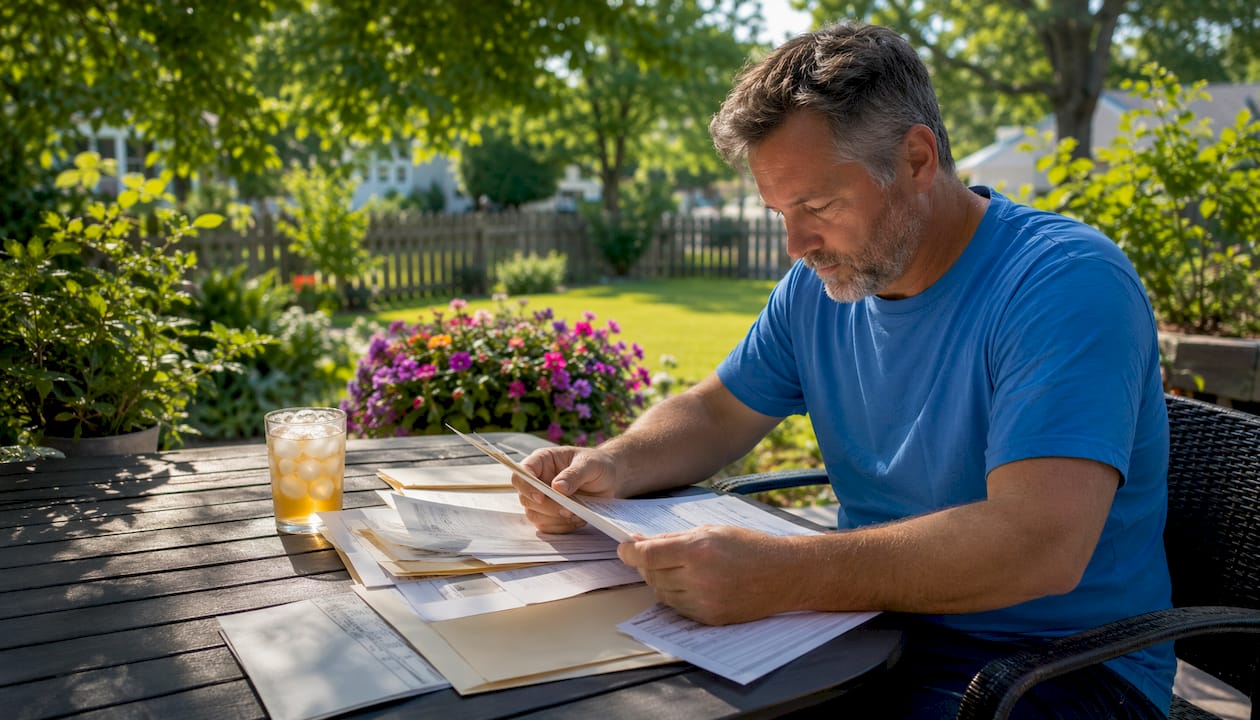
A hassle free car sale checklist is a step-by-step guide that walks car owners through every stage of selling their vehicle, from preparation to final payment, without missing a critical step. The industry term for this process is “private-party vehicle transfer,” and following a structured checklist is the single most reliable way to protect yourself legally, price your car correctly, and close the deal fast. Sellers who skip steps risk delayed sales, title disputes, and payment fraud. This checklist covers DMV requirements, title transfer, payment safety, and buyer screening so you can sell with confidence.
1. Hassle free car sale checklist: gather your documents first
Documentation is the foundation of every clean car sale. Before you list your vehicle anywhere, pull together the signed title, your current registration, all service records, and the owner’s manual. Missing paperwork is the single most common reason a ready buyer walks away at the last minute.
The core documents required for a legally sound transaction are the signed title, a notarized or signed bill of sale, and a state-specific release-of-liability form filed with the DMV on the day of sale. Each document serves a distinct purpose. The title transfers ownership. The bill of sale records the agreed price and date. The release-of-liability form protects you from tickets, accidents, or crimes committed in the vehicle after it leaves your hands.

Pro Tip: Scan every document and save digital copies before handing over originals. If a dispute arises later, your copies are your proof.
2. Clean and detail the vehicle thoroughly
First impressions set the price ceiling in a buyer’s mind. A dirty car signals neglect, even when the mechanical condition is perfect. Spend time on a full detail: wash and wax the exterior, shampoo the carpets, wipe down every interior surface, and clean the windows inside and out.
Pay attention to the engine bay. A quick degreasing and rinse shows buyers you maintained the car with care. Replace burned-out bulbs, fix cracked trim pieces, and touch up paint chips where practical. These small investments cost less than the discount a buyer will demand when they spot obvious neglect.
3. Run a VIN check and disclose vehicle history honestly
Pull a vehicle history report using the VIN before any buyer asks for one. Knowing what is in the report lets you prepare honest answers and avoid surprises during negotiation. Transparency about vehicle history and maintenance builds buyer trust and increases the likelihood of agreeing on a final price.
Disclose accidents, repairs, and known issues upfront. Buyers who discover undisclosed problems after purchase can pursue legal remedies in most states. Honesty protects you legally and shortens the negotiation because the buyer has no hidden concerns to price in.
4. Take high-quality photos from the right angles
Photos are your listing’s first impression. Shoot in natural daylight, never in a garage or under harsh artificial light. Cover these angles at minimum: front three-quarter, rear three-quarter, driver’s side profile, passenger’s side profile, front grille, rear bumper, dashboard, front seats, rear seats, cargo area, and odometer.
Include photos of any imperfections. A photo of a small door ding is far less damaging than a buyer arriving and feeling deceived. Listings with complete, honest photo sets attract serious buyers and filter out time-wasters before the first message is sent.
5. Set a realistic asking price anchored by market data
Price is the variable that controls how fast your car sells. Use Kelley Blue Book’s private-party value as your starting point, then check local listings for comparable vehicles by year, trim, mileage, and condition. Pricing 5–10% below median local comparables can shorten time-to-close from weeks to days, trading a small margin for speed.
A well-prepared listing with professional photos and market-appropriate pricing generates buyer inquiries within 24 hours and leads to a sale in 4–10 days. Set your asking price slightly above your true minimum to leave room for negotiation without going below your floor.
6. Limit your listings to two platforms
Spreading your listing across five or six platforms creates an administrative burden that slows the sale. Listing on no more than two platforms prevents message tracking issues, reduces the risk of duplicate sale confusion, and keeps your sale management straightforward. Choose the two platforms with the strongest local buyer traffic in your area.
Once you accept an offer, remove all active listings immediately. Leaving a listing live after a sale creates legal exposure and wastes time fielding calls you cannot honor.
7. Screen buyers and communicate safely
Safe communication starts before you ever meet a buyer in person. Route all initial contact through the platform’s messaging system. Never share your home address, workplace, or personal phone number until you have confirmed the buyer is serious. Controlled communication and public meetings reduce privacy risks and scam exposure significantly.
Screen buyers with direct questions: Are you paying cash or financing? When can you meet? Have you seen similar vehicles? Serious buyers answer quickly and specifically. Vague or evasive responses are a reliable early warning sign.
- Ask for the buyer’s full name and a photo of their driver’s license before any test drive.
- Never allow a test drive without accompanying the buyer in the vehicle.
- Meet only in public, well-lit locations such as a busy parking lot or a shopping center.
Pro Tip: Many police departments designate a safe transaction zone in their parking lot for private sales. Use it. The presence of security cameras alone deters most scammers.
8. Handle test drives with clear rules
A test drive is where deals are won or lost. Set the route in advance: a 10–15 minute loop that covers city streets and a short highway stretch. Ride along every time. Bring your own copy of the buyer’s driver’s license before handing over the keys.
Check that your insurance covers permissive use by another driver before the test drive. Most personal auto policies do, but confirm with your insurer. If a buyer refuses to show ID or insists on driving alone, end the interaction. No sale is worth the risk of a stolen vehicle.
9. Negotiate from a position of strength
Get an instant cash offer before you list your vehicle privately. An instant offer serves as a guaranteed price floor and gives you real leverage in every negotiation. If a private buyer lowballs you, you have a concrete alternative to reference.
Set your minimum acceptable number before negotiations begin and do not reveal it. Let the buyer make the first offer. Counter with a specific number, not a range. Ranges signal flexibility and invite further pressure.
“Always obtain an instant cash offer before listing your vehicle. It gives you a guaranteed fallback price and turns every negotiation into a conversation you can walk away from. A seller with a real alternative is a seller who never has to accept a bad deal.”
Selling privately typically takes 2–4 weeks, while instant cash offers close in 1–3 days, though usually at 10–25% below private-party value. Knowing that trade-off lets you decide which path fits your timeline.
10. Close the deal with secure payment and clean paperwork
Payment fraud is the final risk in a private car sale. Accept only verified cashier’s checks, bank wire transfers, or cash for amounts you can safely count. Cashier’s checks must be verified with the issuing bank in person before you release the keys. Counterfeit cashier’s checks are a common fraud method, and banks will hold you responsible for a bounced check even after you have handed over the vehicle.
The closing sequence works as follows:
- Meet at the buyer’s bank or your bank to verify the cashier’s check or initiate the wire transfer.
- Sign the title over to the buyer in the presence of a notary if your state requires it.
- Complete and sign the bill of sale with the agreed price, date, VIN, and both parties’ names.
- File the release-of-liability form with your state DMV on the same day.
- Hand over the keys, both sets of keys, and all spare remotes only after payment is confirmed.
- Remove your license plates if your state requires it.
Keep copies of every signed document. Your records protect you if the buyer fails to transfer the title and a parking ticket or toll violation arrives in your name months later. Review the full paperwork checklist to confirm you have covered every state-specific requirement.
Key Takeaways
A complete car sale checklist covering documents, pricing, safety, and payment verification is the most reliable way to sell your vehicle fast and avoid fraud.
| Point | Details |
|---|---|
| Documents first | Gather the signed title, bill of sale, and release-of-liability form before listing. |
| Price with data | Use Kelley Blue Book and local comps; price 5–10% below median to sell faster. |
| Screen buyers early | Verify ID, communicate through platform channels, and meet only in public locations. |
| Verify payment before handing over keys | Confirm cashier’s checks at the issuing bank; never release keys on unverified funds. |
| File DMV paperwork same day | Submit the release-of-liability form on the day of sale to end your legal exposure immediately. |
What I have learned from watching sellers skip the checklist
Sellers who skip even one step in the process almost always pay for it later, and the cost is rarely small. I have seen sellers lose thousands because they handed over keys before a cashier’s check cleared. I have seen deals fall apart at the last minute because the title had a lien that was never resolved. The checklist is not bureaucratic overhead. It is the difference between a clean close and a months-long headache.
The step most sellers skip is getting an instant cash offer before listing. They assume it is only for people who want a quick sale. It is actually the most powerful negotiation tool a private seller has. When a buyer tries to grind you down on price, a real written offer from a registered buyer service ends that conversation immediately.
The other mistake I see constantly is pricing based on emotion rather than data. Sellers anchor to what they paid, what they owe, or what a neighbor got for a similar car two years ago. None of that is relevant to today’s buyer. Kelley Blue Book and current local listings are the only numbers that matter. Sellers who price with data sell faster and argue less.
My honest advice: prepare your paperwork before you take your first photo. By the time a buyer is ready to close, you want to hand over a clean folder with every document already organized. That level of preparation signals professionalism, builds trust, and removes every reason for a buyer to hesitate.
— Omar
Sellkamocars: skip the checklist and sell today
If following every step sounds like more time than you have, Sellkamocars offers a direct alternative. Sellkamocars provides fair cash offers based on current market data, handles free vehicle pickup, and completes payment within 24 hours. No strangers at your door, no negotiation, and no risk of counterfeit checks.
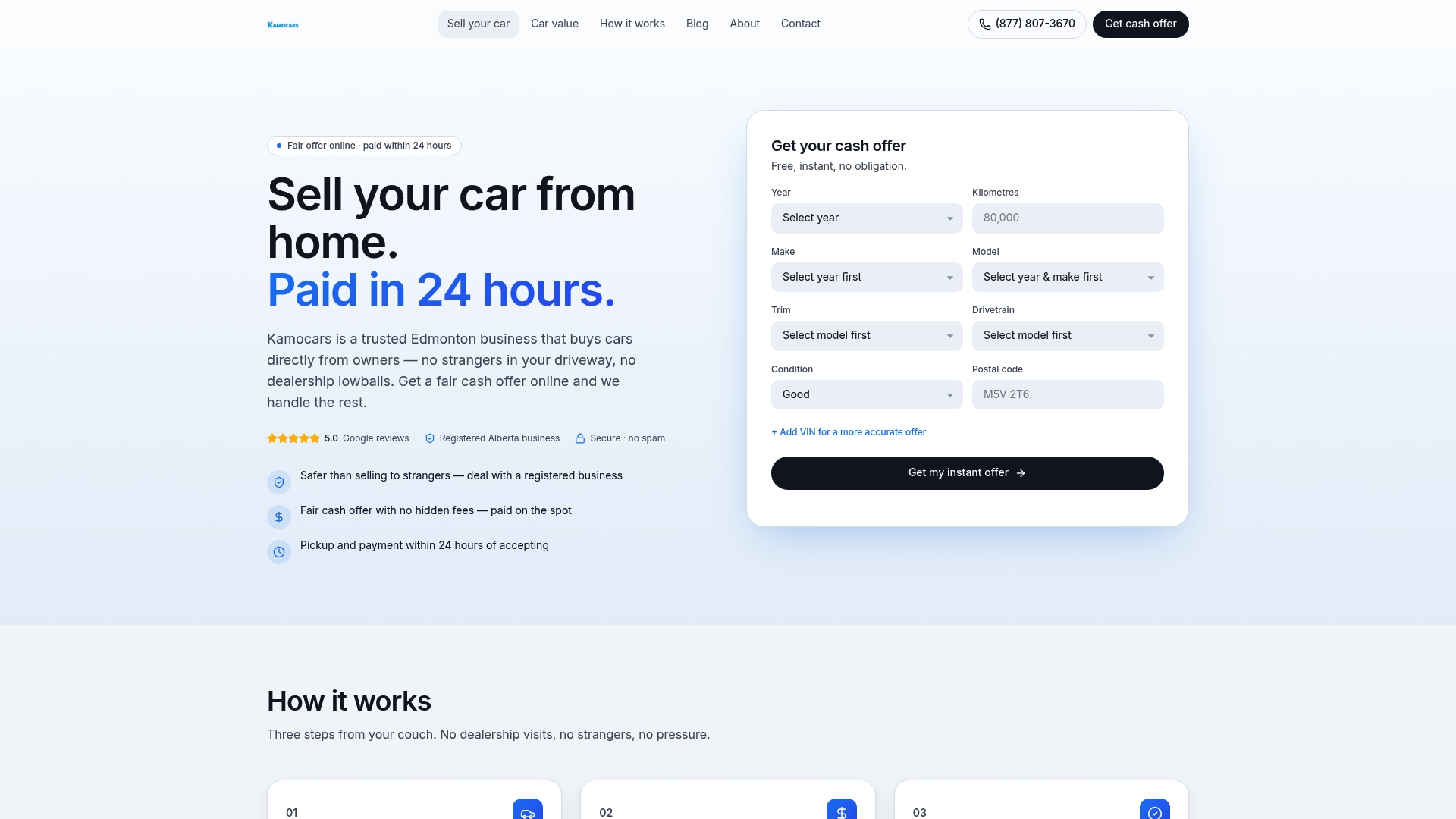
Sellkamocars has completed over 500 transactions with a strong customer rating, and its registered business status protects you in ways that informal platforms cannot. Get your instant cash offer online in minutes, or learn exactly how the process works before you commit to anything.
FAQ
What documents do I need to sell my car privately?
The three core documents are the signed title, a bill of sale, and a state-specific release-of-liability form. File the release-of-liability form with your DMV on the day of sale to end your legal responsibility for the vehicle.
How long does a private car sale take?
A private sale typically takes 2–4 weeks from listing to close. A well-priced listing with professional photos can generate inquiries within 24 hours and close in 4–10 days.
What is the safest way to accept payment when selling a car?
Bank wire transfer is the most secure option. If a buyer pays by cashier’s check, meet at the issuing bank to verify the check before handing over the keys, since counterfeit cashier’s checks are a common fraud method.
Should I get an instant cash offer before listing privately?
Yes. An instant cash offer gives you a guaranteed price floor and real negotiation leverage. If a private buyer offers less than your instant offer, you have a concrete alternative to fall back on.
How do I protect myself during a test drive?
Always accompany the buyer, verify their driver’s license beforehand, and set a fixed route in advance. Meet in a public, well-lit location and confirm your insurance covers permissive use by another driver before handing over the keys.
Recommended
Get a real cash offer in 2 minutes
Trusted business. Fair price. Paid on the spot when we pick up your car.