
How Car Sellers Evaluate Cash Offers: 2026 Guide
Discover how car sellers evaluate cash offers in 2026. Master the appraisal process to make informed decisions and secure the best deal.
How Car Sellers Evaluate Cash Offers: 2026 Guide
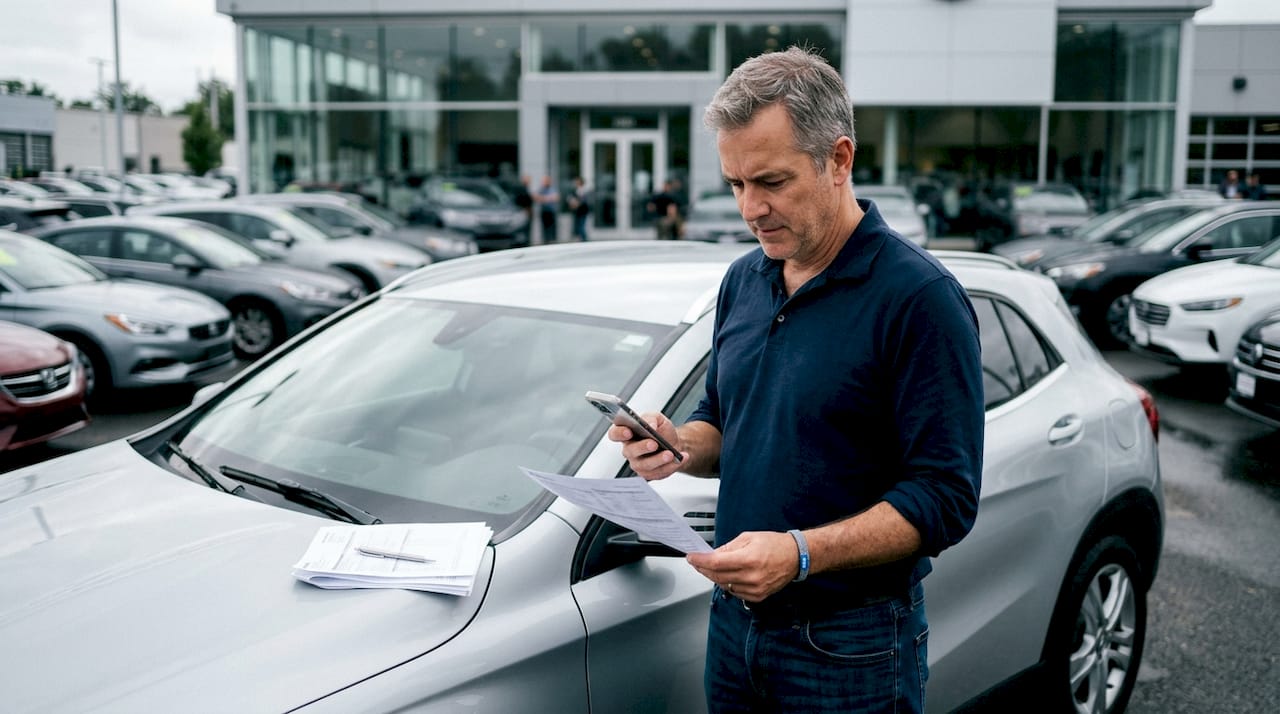
Car sellers evaluate cash offers by combining objective vehicle condition assessments with local market demand and estimated reconditioning costs to produce a purchase price that balances dealer risk and resale potential. Understanding how car sellers evaluate cash offers removes the guesswork from the process and puts you in a stronger negotiating position. The industry term for this process is “vehicle appraisal,” and it follows a consistent methodology whether you sell to a dealership, a mobile buyer, or a service like Sellkamocars. Knowing what drives each number means you can spot a fair offer from a conservative one before you sign anything.
How car sellers evaluate cash offers: the inspection process
The physical inspection is the moment an online estimate becomes a firm cash car offer. Inspections typically last 15–30 minutes and convert a preliminary quote into a binding price. That time window matters because it is the single point where your self-reported condition meets an inspector’s objective findings.
A standardized inspection covers these areas:
- Exterior: Paint condition, panel gaps, dents, scratches, and signs of prior collision repair
- Interior: Seat condition, dashboard wear, odor, and electronics function
- Mechanical: Test drive for transmission, brakes, and suspension feel
- Diagnostic scan: OBD-II port check for stored fault codes and check engine light triggers
- Underbody: Frame integrity, rust, and exhaust condition
Instant online offers are preliminary estimates subject to physical verification, and downward adjustments are common when inspectors find issues sellers overlooked. A cracked windshield, worn tires, or a stored fault code can each reduce the offer by hundreds of dollars. The gap between your self-assessment and the inspector’s findings is the most common source of seller frustration.
Honest disclosure before the inspection minimizes surprises. If you know the air conditioning compressor is weak or the rear bumper has a hairline crack, say so upfront. Inspectors find these items anyway, and disclosing them early signals good faith, which can keep the conversation productive.
Pro Tip: Take photos of every known imperfection before your appointment. This creates a shared baseline and prevents disputes over whether damage was pre-existing.
How do dealers calculate the actual cash offer number?
Dealer offers start with wholesale auction pricing, not consumer guidebooks like Kelley Blue Book. Dealer offers are tied to auction prices reflecting wholesale market activity, and regional preferences can cause notable differences between cities. A Toyota dealer in Edmonton may pay more for a Tacoma than a Ford dealer will, simply because the Toyota dealer can move that truck faster through their existing customer base.
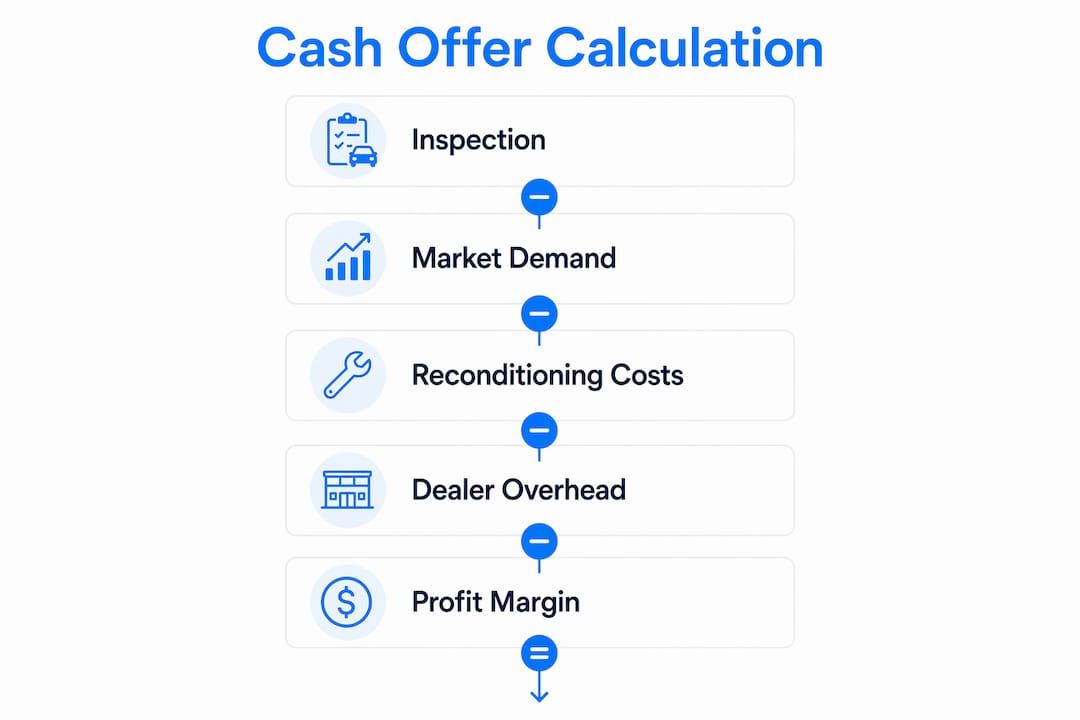
From the auction baseline, dealers subtract four cost categories:
- Reconditioning: Mechanical repairs, detailing, and safety certifications needed before resale
- Overhead: Transportation, lot fees, and administrative costs
- Holding costs: The cost of capital tied up while the vehicle sits on the lot
- Profit margin: The dealer’s required return on the transaction
Typical dealer offers land at 70–86% of private party value after these deductions. That range is not arbitrary. It reflects the real cost of acquiring, preparing, and reselling a used vehicle at retail. The offer is math, not a personal judgment about your car.
Local demand shifts the number meaningfully. A lifted 4x4 truck sells faster in Alberta than in a coastal city, so Alberta buyers will pay closer to the top of that 70–86% range for the right truck. A two-door sports car with a manual transmission faces the opposite dynamic in most Canadian markets. Understanding how car condition affects dealer offers gives you a clearer picture of where your vehicle sits in that range before you walk in.
Pro Tip: Ask the buyer directly: “What reconditioning do you expect this vehicle to need?” Their answer tells you exactly which deductions are driving the offer down.
What is a fair cash offer vs. dealer trade-in or private sale?
Price gaps between offer types are normal. The question is how large a gap is acceptable before you should seek competing bids.
A price gap under 15% between a cash offer and private party valuation is considered normal and reflects standard market friction. A gap over 20% signals that the offer is conservative and warrants testing the market with at least one or two additional quotes.
Here is how the three main channels typically compare:
| Sale channel | Typical return vs. private party value | Average time to complete |
|---|---|---|
| Private party sale | 100% (baseline) | 2–4 weeks |
| Dealer cash offer | 70–86% | 24–72 hours |
| Instant online buyer | 75–88% | 24–48 hours |
Private party sales can yield 14–18% more than a dealer offer, but that premium requires 2–4 weeks of effort including listing, fielding inquiries, test drives with strangers, and negotiating. For a clean standard vehicle, the convenience of a cash offer often outweighs that gap.
The tradeoff shifts depending on your situation:
- Accept the cash offer when you need funds within 48 hours, are relocating, or the vehicle has known mechanical issues that will complicate a private sale
- Test the private market when your vehicle is rare, in exceptional condition, or has aftermarket upgrades that a dealer will not credit
- Get multiple cash offers when the first offer falls below 70% of your estimated private party value
Different dealers pay differently based on brand focus and current inventory needs. Getting two or three independent offers is the fastest way to establish what the market will actually pay for your specific vehicle right now.
What steps can you take to maximize your cash offer?
Getting the best cash offer requires preparation before you contact any buyer. Sellers who show up with documentation and a clear understanding of their vehicle’s condition consistently receive better outcomes than those who rely on the buyer to discover everything.
Gather your documentation first
Pull together your vehicle registration, service records, and any warranty documents. A complete service history, especially oil changes and major repairs done at a dealership, adds credibility to your condition claims and reduces the inspector’s uncertainty. Less uncertainty means fewer conservative deductions.

Get at least two or three independent offers
Inventory needs drive dealer offer differences more than bad faith. A dealer who is overstocked on your vehicle’s segment will offer less than one who has a waiting list for it. Collecting multiple offers from different buyer types, including mobile buyers and online car buying services, gives you a real market sample rather than a single data point.
Address mechanical flags before listing
Mechanical flags like a check engine light cause automated offers to apply steep conservative discounts because the severity is unknown without inspection. A $150 diagnostic appointment that clears a minor fault code can recover $500 or more in offer value. If the repair cost is less than the likely discount, fix it first.
Use private party listings as a benchmark
Post your vehicle on a private listing platform for one week without committing to sell. The inquiry volume and offer levels you receive tell you what retail buyers will pay. That number gives you a ceiling to compare against your cash offers and helps you decide whether the convenience gap is worth it.
Pro Tip: Check the current market value in Alberta before contacting any buyer. Knowing your vehicle’s realistic range prevents you from accepting an offer that sits at the bottom of the 70–86% window when your car deserves the top.
Key Takeaways
The most effective way to evaluate a cash car offer is to understand the dealer’s cost structure, verify the offer against at least two competing bids, and know your private party ceiling before you negotiate.
| Point | Details |
|---|---|
| Inspections convert estimates to firm offers | Physical appraisals take 15–30 minutes and finalize the price based on objective condition findings. |
| Dealer offers reflect auction math | Expect 70–86% of private party value after reconditioning, overhead, and margin deductions. |
| A gap under 15% is normal | Gaps over 20% signal a conservative offer and warrant collecting additional bids. |
| Multiple offers establish real market value | Different dealers pay differently based on inventory needs, so two or three quotes reveal the true range. |
| Mechanical flags cost more than repairs | Fixing a minor fault code before listing often recovers more in offer value than the repair costs. |
What I’ve learned watching sellers navigate cash offers
Most sellers I’ve seen walk into the appraisal process with one critical misunderstanding. They treat the online quote as the final number. It is not. It is a starting estimate built on self-reported data, and the physical inspection is where the real negotiation happens. Sellers who understand this arrive prepared. Sellers who don’t arrive disappointed.
The second pattern I’ve noticed is that sellers interpret offer variance as dishonesty. When one buyer offers $18,000 and another offers $21,000 for the same vehicle, the lower buyer isn’t cheating you. They’re overstocked on your segment, or they don’t have the reconditioning capacity to handle your vehicle’s issues profitably. That $3,000 gap is inventory math, not bad faith. Using it to your advantage is exactly what multiple offers are for.
The hardest conversation is with sellers who need money fast but are emotionally anchored to a private party price they saw online. Convenience and timing often trump maximum possible sale price, especially during life events like relocation or divorce. Accepting 80% of private party value in 24 hours is not a loss. For many sellers, it’s the right call. The key is making that decision with clear numbers in front of you, not out of frustration or urgency you didn’t plan for.
Know your vehicle’s realistic value range. Get two or three offers. Understand what the inspection will flag. Then decide. That sequence produces better outcomes than any single tactic I’ve seen.
— Omar
Why Sellkamocars makes the evaluation process straightforward
Sellkamocars prices every vehicle using current market data, not guesswork. The appraisal process is transparent: you receive a clear explanation of what factors affect your offer, including condition, mileage, and local demand in Edmonton and across Alberta.
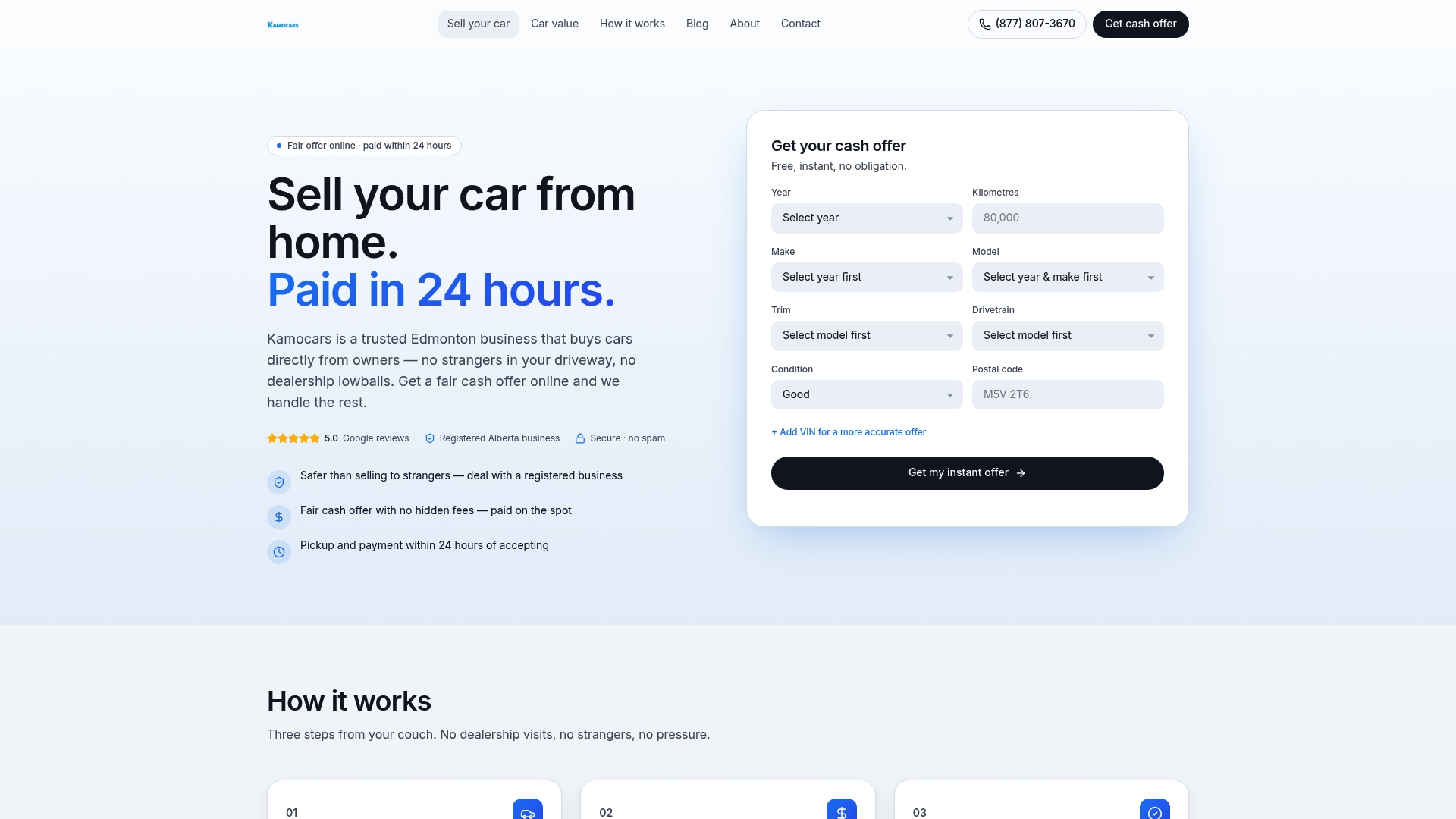
With over 500 completed transactions, Sellkamocars has refined a process that gets sellers a fair cash offer without the back-and-forth of traditional dealership negotiations. Free pickup and payment within 24 hours mean you don’t spend weeks managing a private sale. The registered business status adds a layer of security that informal platforms can’t match. See exactly how it works and get your no-obligation offer today.
FAQ
What is a cash car offer?
A cash car offer is a firm purchase price a buyer commits to paying for your vehicle, typically settled within 24–48 hours without financing contingencies. The offer is based on vehicle condition, mileage, local market demand, and estimated reconditioning costs.
How long does a vehicle inspection take for a cash offer?
Physical inspections typically take 15–30 minutes and cover exterior condition, interior wear, a test drive, a diagnostic scan, and an underbody check. The inspection converts your online estimate into a firm, binding price.
Why is the dealer cash offer lower than private party value?
Dealers deduct reconditioning costs, overhead, holding costs, and a profit margin from the wholesale auction price. Typical offers land at 70–86% of private party value, which reflects the real cost of preparing and reselling your vehicle at retail.
How many offers should I get before accepting?
Get at least two or three independent offers from different buyer types. Different dealers pay differently based on brand focus and inventory needs, so multiple quotes reveal the true market range for your specific vehicle.
What is a no-obligation car cash offer?
A no-obligation cash offer is a purchase price quote you can accept or decline without any commitment or fee. It gives you a verified market data point to compare against other offers without locking you into a sale.
Recommended
Get a real cash offer in 2 minutes
Trusted business. Fair price. Paid on the spot when we pick up your car.