
Verify and Fix Your CARFAX Before Listing in Canada to Avoid Surprises
Order and verify your CARFAX before listing in Canada. Fix errors, gather receipts, check provincial rules, or opt for a fast cash offer.
Verify and Fix Your CARFAX Before Listing in Canada to Avoid Surprises
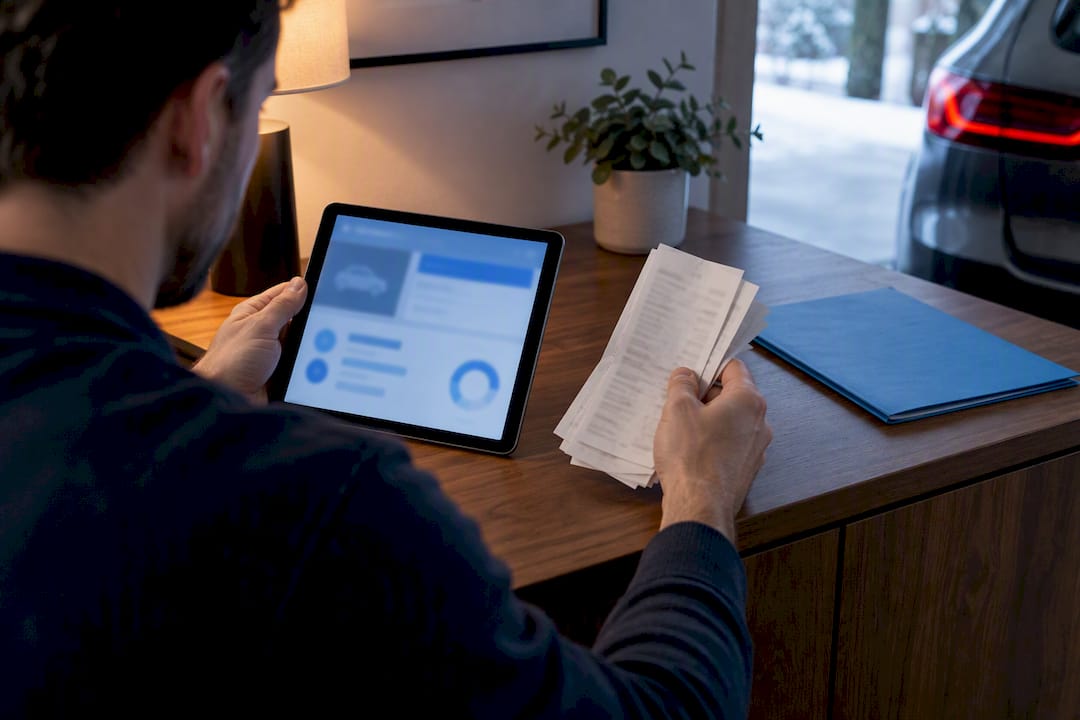
Yes. Order and verify a CARFAX Canada report before you list your car, truck, or SUV. It builds buyer trust and cuts off the lowball negotiating that happens when buyers assume the worst. Start by ordering a report using your VIN, then check it against your provincial paperwork requirements before you write a single word of your listing.
TL;DR:
- Ordering a CARFAX Canada report takes minutes and provides crucial vehicle data, including accident history, ownership, odometer readings, and recalls, to prepare for sale.
- Verifying the report against your receipts and records ensures accuracy and helps you dispute any errors before listing your vehicle.
- Sharing the report in your listing or negotiations reassures buyers, potentially increasing your price and reducing time on the market.
- Provincial paperwork, such as Ontario’s UVIP, remains mandatory, and pairing it with the CARFAX report offers a complete legal transfer package.
- For a quick sale, sellers with a 2018 or newer vehicle can opt for a cash offer service that bypasses the listing process entirely.
Table of Contents
- What Does a CARFAX Canada Vehicle History Report Show?
- Why Pull CARFAX Before You List: Trust, Price, and Speed
- How Do You Order and Verify a CARFAX Canada Report?
- How to Use the CARFAX Report in Listings and Negotiations
- Provincial Paperwork and Other Required Documents When Selling in Canada
- Fixing Errors and Adding Missing Service Records to CARFAX Canada
- Practical Seller Checklist and Author Perspective
- How Long Does It Take to Get a CARFAX Report Before Selling?
- Common Red Flags in a CARFAX Report That Affect Sale Price
- How to Interpret Accident and Repair History for Buyer Questions
- What This Guide Gets Right That Most Advice Misses
- A Fast, No-Haggle Option for Sellers Who Prefer a Quick Sale
- Sources
- FAQ
What Does a CARFAX Canada Vehicle History Report Show?
A CARFAX Canada report pulls together data most buyers can’t get anywhere else. It’s built from provincial registries, insurance companies, collision repair shops, and auction houses, so it paints a picture no single seller could fake even if they wanted to.
Here’s what typically shows up:
- Accident and damage records, including title brands like salvage or rebuilt status
- Ownership and registration history, showing how many owners the vehicle has had and in which province
- Odometer readings logged at each registration event, which flags rollback attempts
- Service records reported by participating shops and dealerships
- Open recalls tied to the vehicle’s VIN
The gaps matter as much as what’s included. A report only reflects what gets reported. If your last oil change happened at an independent shop that doesn’t send data to CARFAX, that visit won’t appear anywhere. Buyers who understand this will ask for maintenance receipts anyway, so don’t assume the report alone tells your car’s full story.
Why Pull CARFAX Before You List: Trust, Price, and Speed
Buyers who see no history report assume the worst. Without documentation, a buyer has no way to rule out flood damage, a rolled-back odometer, or an unreported accident. So they mentally discount their offer to cover that risk, even on a car with a completely clean past.
A report flips that dynamic. When you show buyers the vehicle’s documented history upfront, you remove the reason for that discount before negotiations even start.
Industry summaries tracking used-vehicle sales report a measurable price premium and faster time on market for listings that include a vehicle history report compared with listings that don’t.
CARFAX Canada also offers a History-Based Value tool that adjusts your car’s estimated worth based on its actual reported events and your local market. That gives you a defensible number to point to when a buyer pushes back on price, instead of relying on a generic online estimate that doesn’t account for your car’s real condition.
How Do You Order and Verify a CARFAX Canada Report?
Ordering takes minutes. Verifying takes a bit more effort, and it’s the step most sellers skip.
- Order by VIN. Head to CARFAX Canada’s site, enter your 17-character vehicle identification number, and pay the report fee.
- Choose your sharing format. You’ll get a shareable link and a downloadable PDF, both useful depending on where you’re posting your listing.
- Read the summary first. The top of the report flags any accidents, brands, or odometer discrepancies before you scroll into details.
- Verify every flagged item. Match each entry against your own receipts, registration papers, and service records. If something doesn’t match your memory of the car’s history, that’s your cue to dig further.
- Start a dispute if needed. If you find an error, gather your supporting documents, service receipts, registration, bill of sale, and submit a correction request with CARFAX Canada.
Pro Tip: Order your report at least two weeks before you plan to list. Corrections and added service records can take several days to process, and you don’t want a dispute holding up your sale timeline.
One more thing: be careful how widely you share your VIN before you’re ready to sell. A VIN paired with your name and address is enough for someone to pull registration details, so save the full report link for serious inquiries rather than posting your raw VIN publicly.
How to Use the CARFAX Report in Listings and Negotiations
Your report is a selling tool, not a formality. Treat it like one.
- Signal it in your headline. Something like “One-owner, clean CARFAX, full service history” tells buyers immediately that you have nothing to hide.
- Decide when to share the full report. Some sellers attach the shareable link directly in the listing; others mention it’s available on request to filter out casual browsers.
- Upload it to your listing platform. AutoTrader, Kijiji, and Facebook Marketplace all support linking or attaching a PDF, and listings with a visible report tend to draw more serious replies.
- Reference specific entries during negotiation. If your report shows consistent service intervals or a single owner, point to those lines directly instead of just saying “it’s been well maintained.”
- Address minor accidents head-on. A small repaired fender bender looks far less alarming when you can show the repair invoice alongside the CARFAX entry, rather than letting a buyer discover it and assume the worst.
Some buyers will show up with their own report or an independent inspection already booked. That’s not a red flag on their part. It means they’re serious, and your own verified report gives you a shared starting point instead of two conflicting stories about the car’s past.
Provincial Paperwork and Other Required Documents When Selling in Canada
CARFAX is supplemental. It doesn’t replace the legal paperwork your province requires to transfer ownership.
- Ontario requires a Used Vehicle Information Package (UVIP), which the seller must provide to the buyer at the point of sale.
- Other provinces have their own transfer and safety inspection requirements. Check your provincial transportation ministry’s site before listing, since rules differ.
- Liens and outstanding finance must be disclosed. If there’s still a loan balance on the vehicle, you need to clear it or address it directly in the sale, and hiding a lien from a buyer can expose you to legal trouble later.
There is no universal national requirement to provide a CARFAX report when selling privately in Canada, but pairing it with your province’s mandatory paperwork gives buyers a complete, honest picture.
Fixing Errors and Adding Missing Service Records to CARFAX Canada
Common errors include incorrect mileage entries, a missing registration transfer, or service work that never made it into the system. Each of these can spook a buyer or drag your asking price down for no good reason.
To dispute an error, submit your service receipts, registration, and bill of sale to CARFAX Canada. Corrections typically take several days to process, so don’t wait until the week you plan to list.
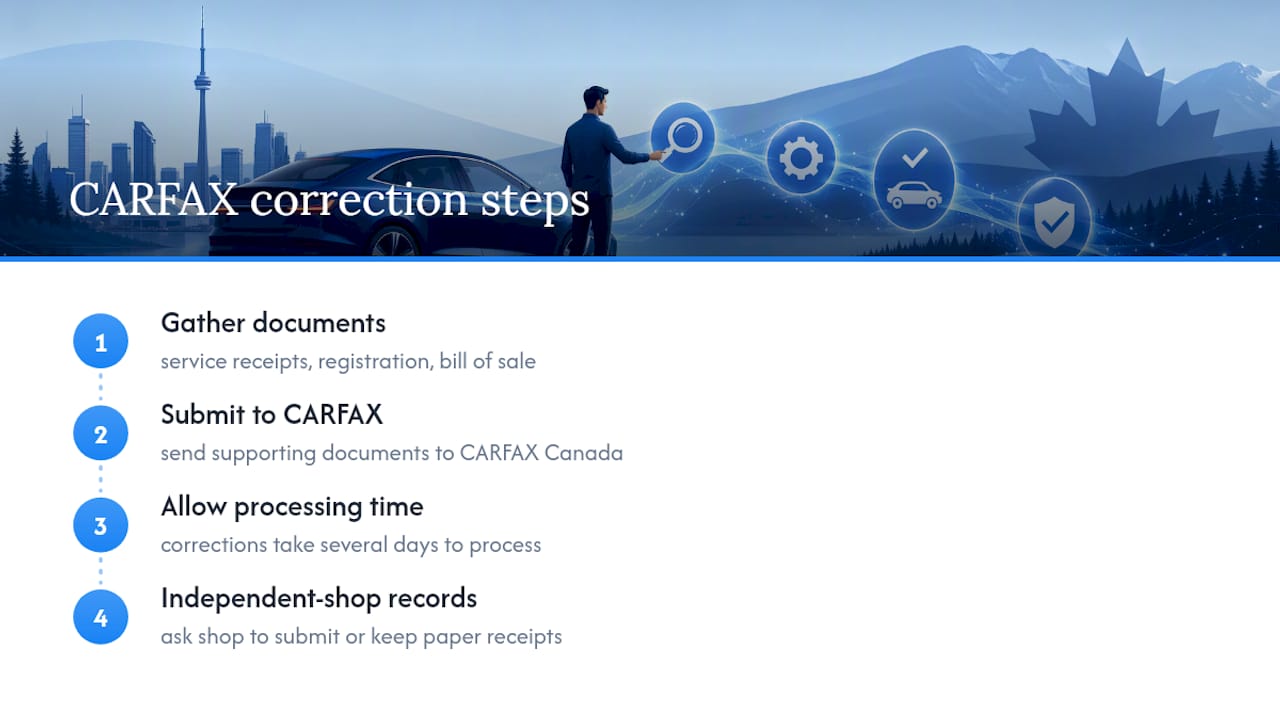
Not every shop reports automatically. If you’ve used independent mechanics who don’t send data to CARFAX, ask whether they can submit records manually, or keep your paper receipts to show buyers directly. A thin service history on the report doesn’t mean a thin maintenance history in reality, but you’ll need to prove that yourself.
Practical Seller Checklist and Author Perspective
Run your report, verify every line, gather receipts, list with your CARFAX link attached, then field offers or schedule inspections. If that process sounds like more time than you have, a direct cash offer through a service like Kamocars skips listing entirely. Most sellers stumble by skipping verification, not by skipping the report itself.
How Long Does It Take to Get a CARFAX Report Before Selling?
Ordering itself is nearly instant. You’ll typically have your report within minutes of paying the fee, since CARFAX Canada pulls from databases that update continuously.
The real time cost comes after you’ve read it. If everything checks out clean against your receipts and registration, you’re ready to list the same day. But if you spot an error, a missing service entry, or an odometer mismatch, plan for extra time. Corrections submitted to CARFAX Canada with supporting documents can take several days to process, and adding shop records that weren’t automatically reported follows a similar timeline.
That’s why the timing advice throughout this guide keeps repeating: order early. A seller who pulls their report the same week they want to list is gambling that nothing needs fixing. A seller who orders two to three weeks ahead has breathing room to dispute an error, track down an old receipt, or call a shop and ask them to submit a missing service record.
If your car has a completely uneventful history, one owner, no accidents, consistent dealership service, you may not need any of that buffer. But you won’t know which category you’re in until you actually read the report, which is exactly why the order-early approach costs you nothing and protects you from a last-minute scramble right when you’re trying to close a sale.
Common Red Flags in a CARFAX Report That Affect Sale Price
Not every flag on a CARFAX report is a deal breaker, but some carry more weight with buyers than others.
Title brands top the list. A salvage or rebuilt brand signals the vehicle was declared a total loss at some point, and buyers will factor that into their offer regardless of how well the repair was done. Understanding the difference between salvage and rebuilt titles helps you explain the distinction accurately instead of letting a buyer assume the worst version of either.
Odometer discrepancies raise immediate suspicion, even when there’s an innocent explanation like a cluster replacement. Be ready to explain any mismatch with documentation.
Multiple short-term owners can suggest the car had recurring problems that sent it back to the market again and again, even if the real reason was unrelated, like a lease turnover or a relocation.
Unrepaired or unexplained accident entries without a matching repair invoice leave buyers guessing about the severity. Provide the repair paperwork whenever you can.
Gaps in service history longer than a year or two make buyers wonder if maintenance was neglected, even if you simply used a shop that doesn’t report to CARFAX.
None of these automatically tank a sale. What tanks a sale is a buyer discovering one of these on their own, unexplained, after you’ve already told them “it’s got a clean history.”
How to Interpret Accident and Repair History for Buyer Questions
Buyers ask sharper questions when they’ve already read the report themselves, so know your own history better than they do.
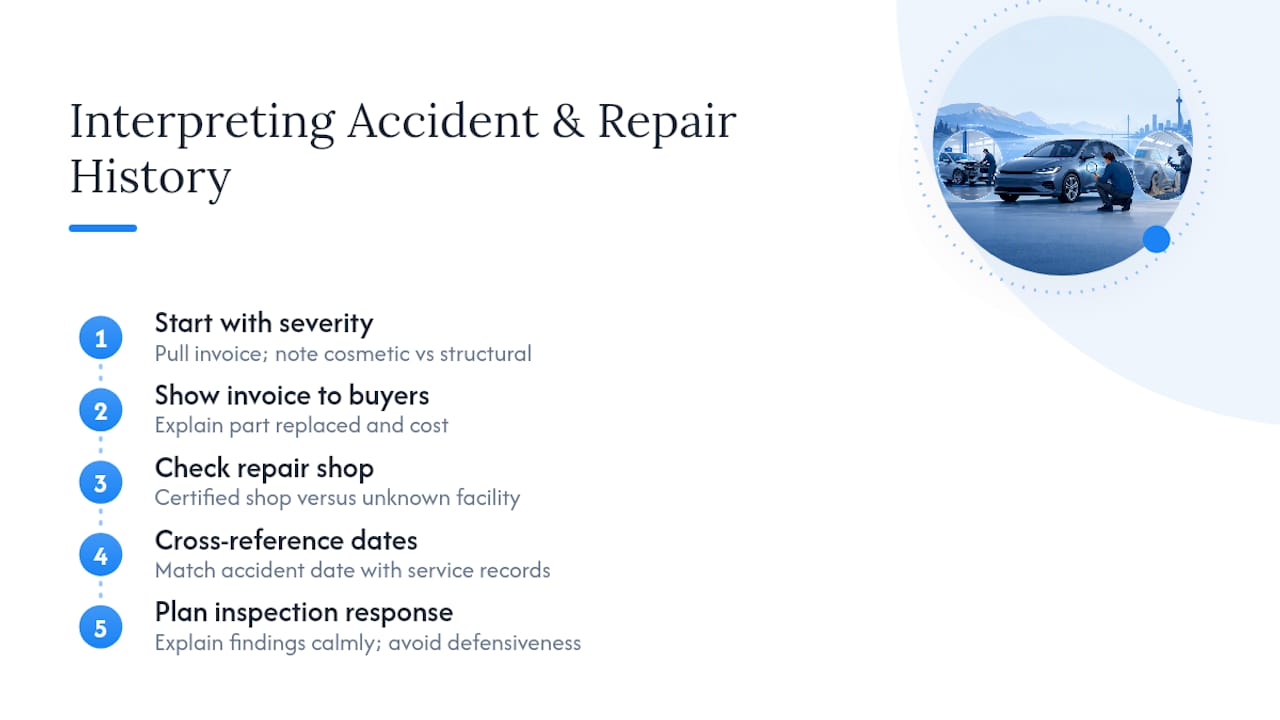
Start with severity. A report entry might say “reported accident” without specifying whether it was a cracked bumper or a structural repair. Pull your own repair invoice to know exactly what was replaced, whether it was cosmetic or structural, and how much it cost. Buyers respond far better to “this was a rear bumper replacement after a parking lot bump, here’s the invoice” than to an evasive answer about an accident you’d rather not discuss.
Check whether the repair happened at a certified shop versus an unknown facility. Certified collision repair carries more weight with buyers who know that structural work done incorrectly can affect long-term safety.
Cross-reference the date of any accident entry against your service records. If you had an alignment or suspension work done shortly after a reported accident, that’s a good sign the repair was thorough, not rushed.
Finally, decide in advance how you’ll respond if a buyer’s own inspection turns up something the CARFAX report missed. Since the report only reflects what’s been reported to it, an independent inspection can occasionally surface something new. Treat that as a chance to explain, not a reason to get defensive. Sellers who answer directly close deals faster than sellers who get evasive.
What This Guide Gets Right That Most Advice Misses
Most seller advice treats CARFAX like a formality: order it, attach it, done. That undersells what the report actually does. The real value isn’t the document itself, it’s the verification work you do before anyone else sees it.
Too many Canadian sellers skip straight to listing without checking their report against their own receipts. Then they get blindsided mid-negotiation when a buyer spots a flagged item the seller didn’t even know was there. That’s an avoidable mistake, and it costs real money in the form of a spooked buyer walking away.
The provincial paperwork piece also gets underplayed on most generic guides written for a US audience. A CARFAX report doesn’t satisfy Ontario’s UVIP requirement or any other province’s transfer rules. Treat the report and your provincial paperwork as two separate obligations that happen to reinforce each other.
If you take one thing from this guide, order your report weeks before you need it, not days. That buffer is what turns a stressful correction scramble into a routine step you barely notice.
— Omar
A Fast, No-Haggle Option for Sellers Who Prefer a Quick Sale
If everything above sounds like more work than you want to take on, that’s exactly the gap Sellkamocars fills. Instead of ordering a report, writing a listing, and fielding buyer questions for weeks, you get a binding cash offer built on current Canadian wholesale data, free home pickup, and fast payment.
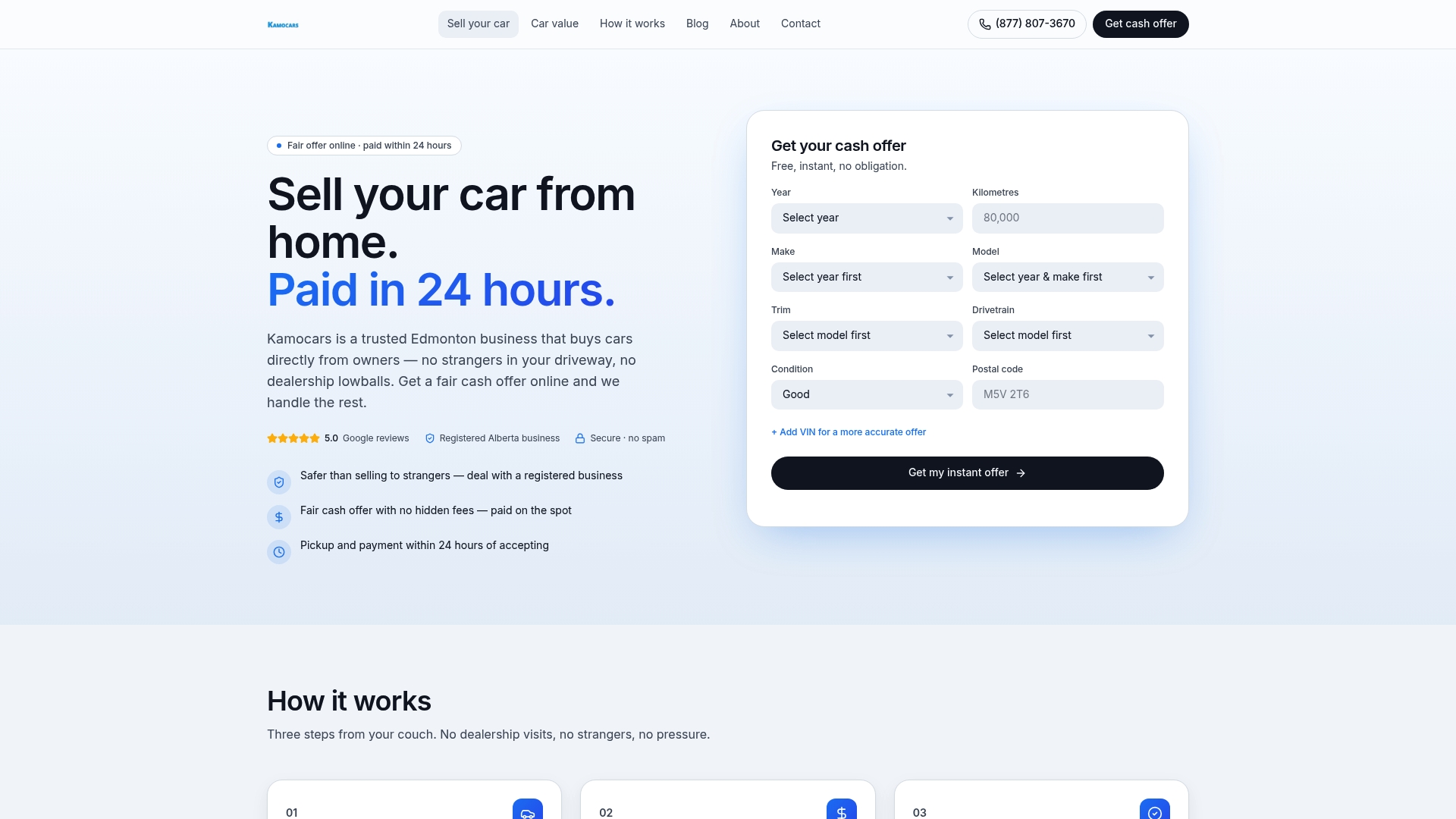
This route fits sellers with a 2018 or newer car, truck, or SUV in running condition who’d rather skip the back and forth entirely. It works whether your vehicle is financed or leased, since the service handles lien clearance as part of the process.
To get started, have your VIN, registration, and any lien or loan information ready, then request your offer through the Sell My Car page. If you want to see exactly how the pickup and payment process works before you commit, the how it works page walks through each step.
Sources
For province-specific requirements, check your provincial transportation ministry’s site directly. CARFAX Canada’s own selling guide covers report details and dispute steps in full, and the salvage versus rebuilt title guide explains title brands in more depth than a report summary alone.
- Selling a Used Car: Steps to Selling a Vehicle | CARFAX Canada
- How to Sell a Used Car for Maximum Value (2026) | G4CAR
FAQ
Do you have to provide CARFAX when selling a car?
No national law requires a CARFAX report for a private car sale in Canada. Provinces have their own mandatory paperwork instead, like Ontario’s UVIP, but a CARFAX report is a strong optional tool for building buyer trust and supporting your price.
When did CARFAX start in Canada?
CARFAX Canada grew out of CARPROOF, an earlier Canadian vehicle history provider, before rebranding under the CARFAX name. It’s now the standard vehicle history reporting service used across the Canadian used-car market.
Is there a Canadian version of CARFAX?
Yes, CARFAX Canada is the dedicated Canadian service, separate from the US version, and it pulls data specific to Canadian registries, insurers, and repair shops. It’s the version sellers and buyers across Canada rely on for accurate history.
Can I get a free CARFAX report in Canada?
CARFAX Canada reports carry a fee, and there’s no official free full report available directly from CARFAX. Some listing platforms or dealership partners occasionally offer a preview or partial report, but a complete verified report requires payment through CARFAX Canada’s official site.
What if I don’t want to deal with listing my car at all?
If listing, negotiating, and verifying a report sounds like more effort than it’s worth, a direct cash offer through Sellkamocars skips that process entirely for Alberta sellers with a 2018 or newer running vehicle. You get pickup and payment handled quickly instead of weeks of buyer inquiries.
Recommended
Get a real cash offer in 2 minutes
Trusted business. Fair price. Paid on the spot when we pick up your car.