
What Hurts Resale Value on a Car, Truck, or SUV
Discover key factors that hurt resale value on cars, trucks, and SUVs. Learn how to address these issues and maximize your vehicle's worth.
What Hurts Resale Value on a Car, Truck, or SUV

High mileage, spotty service records, accident or salvage history, warning lights, heavy aftermarket modifications, and visible interior or exterior damage do the most damage to what your vehicle is worth. Together they push buyers toward lower offers because each one adds risk the buyer has to price in. The good news: most of these are fixable, or at least manageable, in the days before a fast cash sale.
TL;DR:
- Missing maintenance records can lower a vehicle’s offer by 10 to 20 percent or about $2,000 to $5,000, due to unverifiable service history.
- Active warning lights, accident history, or visible damage significantly reduce resale value, with branded titles potentially eliminating offers altogether.
- Cosmetic repairs like detailing and fixing small dents typically give a higher return than more costly fixes like repainting, which rarely pays for itself.
- Selling during peak demand seasons or in regions with preferences for SUVs and trucks can increase offers, especially if regional usage and climate issues are disclosed.
- Transparent documentation of repairs, ownership history, and vehicle condition results in better offers and minimizes surprises that hurt resale value.
Table of Contents
- What Hurts Resale Value Most (Ranked and Quantified)
- Why Buyers Discount: The Risk-Premium Math Behind Every Offer
- What to Fix, Disclose, or Skip Before a Fast Sale
- How Market Timing Changes What You’re Offered
- The Documents That Restore Buyer Confidence
- Does Ownership History Affect What You Get Offered?
- Does Color Really Change What a Buyer Will Pay?
- Do Regional Preferences Change What Your Vehicle Is Worth?
- Where Sellers Lose the Most Money Without Realizing It
- Get a Fair Cash Offer Without the Repair Guesswork
- Sources
What Hurts Resale Value Most (Ranked and Quantified)
Not every flaw costs you the same amount. Some knock a few hundred dollars off; others cut your offer by thousands. Here’s how the biggest resale-value killers actually stack up.
- Mileage and age: most vehicles depreciate faster once they cross typical annual benchmarks (roughly 15,000 to 20,000 km per year); a truck or SUV running well above that pace gets valued closer to the next age bracket, regardless of its actual condition.
- Missing maintenance records: cars without documented service histories commonly see 10 to 20 percent lower offers, or a flat $2,000 to $5,000 risk buffer, because the buyer has no way to confirm the engine or transmission was cared for.
- Accidents and title brands: a repaired collision typically knocks off at least 10 percent versus a comparable accident-free vehicle, and a salvage or rebuilt title can cut value far deeper or eliminate offers from buyers who won’t touch branded titles at all.
- Mechanical issues and warning lights: an active check-engine light or a known transmission shudder gets treated as a pending repair bill, and buyers subtract the estimated cost, sometimes with a margin added for the unknown.
- Visible damage, rust, and odors: dents, torn upholstery, and smoke or pet smells are the fastest things a buyer notices, and they shape a first impression that carries into the number they offer.
- Aftermarket modifications: non-factory exhausts, lift kits, tuned engines, and altered suspensions narrow your buyer pool and usually reduce value unless they’re documented, compliant, and easy to reverse.
Each factor compounds. A 2019 truck with 140,000 km, no receipts, and an aftermarket lift kit doesn’t get penalized once. It gets penalized three separate times before anyone even looks at the tires.
Why Buyers Discount: The Risk-Premium Math Behind Every Offer
Every offer you receive is a bet the buyer is making on how much trouble your vehicle will cause them later. When information is missing, buyers protect themselves by assuming the worst case, not the average case.
That’s why a car with no service history doesn’t just lose a little value. It gets hit with a risk buffer, often in the $2,000 to $5,000 range, that has nothing to do with the car’s actual mechanical condition and everything to do with what the buyer can’t verify. Documentation shrinks that buffer because it replaces guesswork with proof.
Professional and online buyers move fast, and speed changes the math. A dealership can afford to sit on inventory for weeks and recover margin slowly. An online cash buyer needs to resell quickly, so unknowns cost more per day the vehicle sits unsold. That’s part of why documented major repairs like a new transmission or timing belt often get partial value added back, while the same repair with no paper trail gets treated as a liability instead of an asset.
What to Fix, Disclose, or Skip Before a Fast Sale
You don’t have weeks to prep a car for sale. Here’s the order of operations that actually moves your offer, starting with what pays back the fastest.
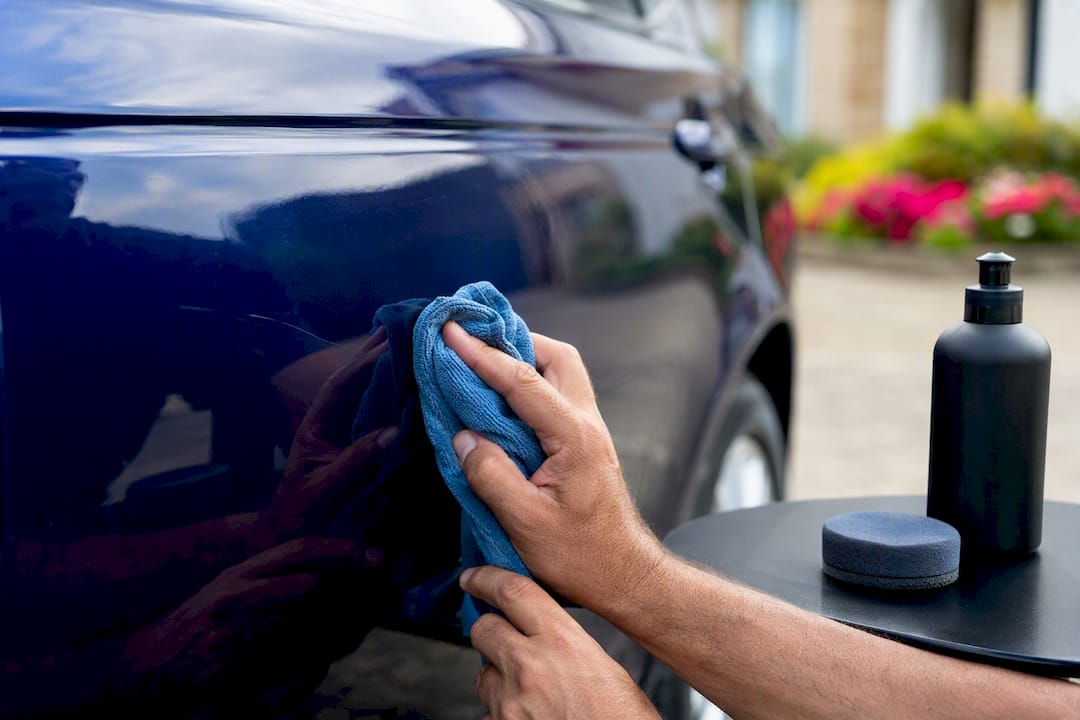
- Wash, vacuum, and deodorize first. A $50 to $150 detail routinely returns more than it costs in a higher offer, because it removes the “neglected vehicle” impression before a buyer looks at anything mechanical.
- Fix small, cheap cosmetic issues. Bulbs, wiper blades, minor dent removal, and water spots on paint or glass are inexpensive wins; a safe water-spot removal process can restore a windshield or hood in an afternoon.
- Gather every piece of paper you have. Oil change receipts, brake job invoices, and any major repair records should be photographed or scanned into a single folder, ideally as PDFs, before you request an offer.
- Pull a vehicle history report. A Carfax or AutoCheck report costs less than the discount buyers apply when they assume the worst.
- Separate safety issues from cosmetic ones. Disclose anything safety-related (brakes, tires below legal tread, warning lights) upfront; cosmetic wear can be noted honestly without triggering the same discount.
- Deal with modifications honestly. Reverse cheap, easily removed mods (aftermarket badges, tints that don’t meet regulations), keep receipts for anything expensive and professionally installed, and disclose the rest.
- Consider a quick pre-sale inspection. A mobile pre-purchase inspection costing $100 to $200 can catch a hidden issue before a buyer does, letting you either fix it cheaply or price around it instead of losing the sale entirely.
Pro Tip: Take photos of receipts and repairs before and after the work, then bundle them into one labeled digital folder. Online buyers verify faster when everything is in one place, and faster verification usually means a better offer.
Skip anything cosmetic that costs more to fix than it adds to your offer. A full repaint on a truck with otherwise clean paint almost never pays for itself.
How Market Timing Changes What You’re Offered
The calendar affects your offer as much as the car does. Trucks and SUVs command stronger interest heading into winter, while convertibles and smaller cars see softer demand in the colder months. Selling a half-ton pickup in October usually beats selling the same truck in February.
- Seasonal demand shifts by vehicle class, so timing your sale to match buyer interest can add meaningful dollars without touching the vehicle itself.
- Fuel prices and shifting buyer preference toward efficient trims affect what larger vehicles fetch, especially when gas prices spike.
- A fresh model-year refresh on your make and model can push last year’s version down in perceived value, even if nothing about your specific vehicle changed.
- Instant-cash buyers trade a small amount of top-dollar potential for speed and certainty. If you need funds in days, that tradeoff usually works in your favor once you factor in the weeks a private sale often takes.
The Documents That Restore Buyer Confidence
Paperwork does more to raise your offer than almost any repair you could make. It’s the difference between a buyer guessing and a buyer knowing.
- Vehicle history report: shows accident records, title status, and past ownership; buyers check these routinely, and their presence measurably reduces uncertainty.
- Service receipts and parts invoices: scan or photograph them, organize by date, and present them as a simple digital record tied to your car’s history.
- Honest disclosure of repairs and mods: state what happened, when, and who did the work; vague answers read as hidden problems even when nothing is actually wrong.
- Lien release and clear title: confirm your loan is paid off or get payoff documentation ready, since an unresolved lien can stall or kill an online offer entirely.
Does Ownership History Affect What You Get Offered?
Yes, and it’s one of the quieter factors sellers overlook. A one-owner vehicle almost always commands more confidence than one that changed hands three or four times in six years, even when both have identical mileage and condition. Frequent ownership turnover raises a flag: buyers wonder whether something about the car caused each previous owner to move on quickly.
Usage type matters just as much as owner count. A vehicle used for personal commuting typically wears more evenly than one used commercially, for ride-sharing, delivery routes, or as a work truck hauling loads daily. Commercial use often means more stop-and-go driving, more interior wear from constant passenger turnover, and more strain on brakes and suspension components. That doesn’t automatically disqualify the car, but it does mean a buyer will look harder at maintenance records to confirm the extra use was matched with extra care.
If your vehicle has had only one or two personal owners, say so plainly when you request an offer. If it spent time in commercial service, saying that upfront and pairing it with maintenance receipts prevents a buyer from assuming the worst about how hard it was driven. Silence on ownership history reads the same way missing service records does: as a gap the buyer has to price around.
Does Color Really Change What a Buyer Will Pay?
It does, more than most sellers expect. White, black, gray, and silver sell fastest and hold value best because they appeal to the widest range of buyers and resell easily regardless of who buys next. Bright yellows, oranges, and unusual custom colors can help a vehicle stand out for niche buyers, but they narrow your resale pool, especially for trucks and SUVs where fleet-style neutral tones dominate demand.
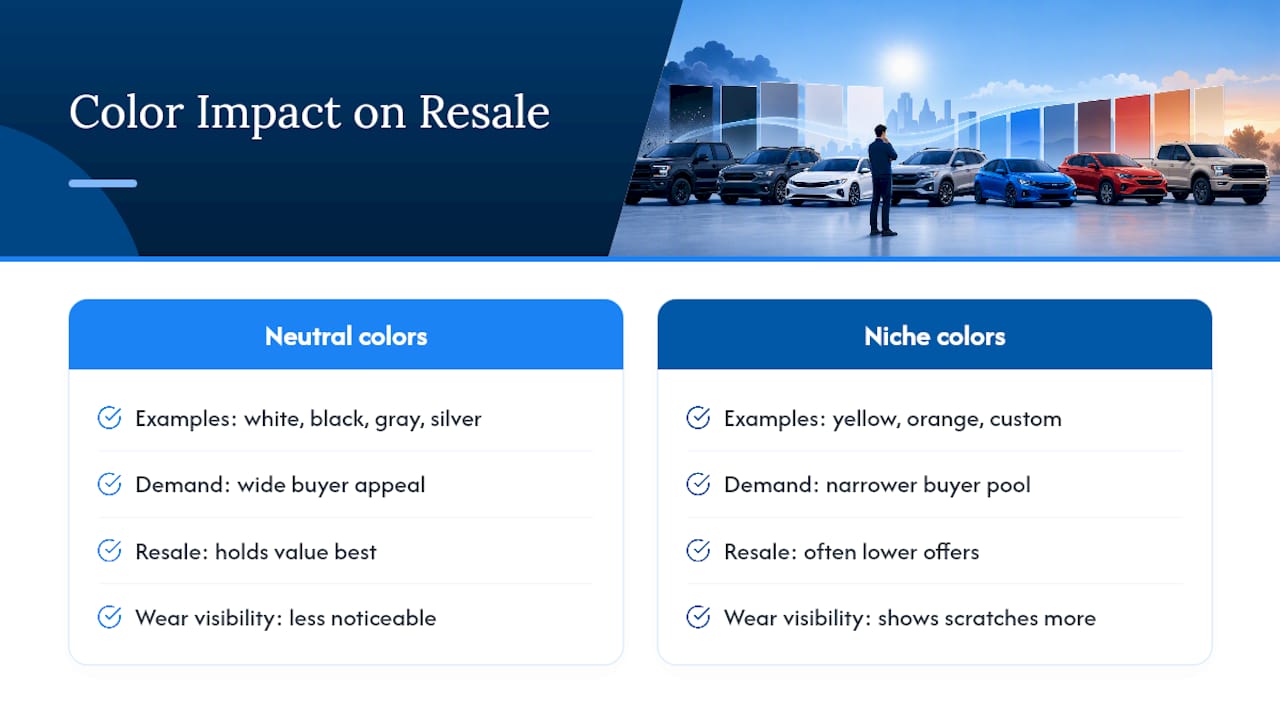
Certain colors also show wear differently. Matte finishes and dark colors reveal swirl marks and minor scratches more visibly than lighter, glossier paint, which can make an otherwise well-kept vehicle look more worn than it is in photos. If your vehicle sits in an unusual color, a thorough wash and a light polish before requesting an offer matters more than it would on a neutral-colored car, since first-impression photos carry extra weight when the color itself is already working against broad appeal.
There’s not much you can do to change your vehicle’s color before a fast sale, and repainting rarely pays for itself. Understanding the effect at least explains part of the gap if your offer comes in lower than a similar vehicle in a more common shade.
Do Regional Preferences Change What Your Vehicle Is Worth?
Local demand shapes offers as much as national trends do. Trucks and all-wheel-drive SUVs tend to command stronger interest in regions with harsh winters, gravel roads, or rural driving conditions, where buyers value ground clearance and four-wheel drive as necessities rather than upgrades. In areas with milder climates and more urban driving, smaller, fuel-efficient cars often see steadier demand and less price flexibility on trucks.
Climate history matters too, not just current buyer taste. A vehicle that spent its life in a region with heavy road salt use during winter can show more undercarriage rust than a vehicle of the same age and mileage from a drier region, and buyers who know this will factor it into their assessment. Sellers whose vehicles have been well maintained despite tough regional conditions benefit from saying so directly and backing it up with records, since it counters an assumption a buyer might otherwise make automatically.
Fuel efficiency and emissions ratings also carry different weight depending on where demand is strongest. In markets where fuel costs are a bigger day-to-day concern, an efficient trim or hybrid variant can hold value better than a comparable gas-heavy model, even within the same vehicle line. None of this is something you can change before a sale, but knowing how your region and vehicle type intersect helps set realistic expectations for the offer you’re likely to see.
Where Sellers Lose the Most Money Without Realizing It
The biggest mistake I see isn’t a bad car. It’s a seller who hides a problem instead of disclosing it with documentation attached. Buyers don’t punish honesty nearly as hard as they punish surprises, and an undisclosed issue discovered later almost always costs the seller more than the same issue disclosed upfront with a receipt showing it was handled.
A fast, effective checklist looks like this: detail the interior, photograph everything including receipts, pull a history report, separate safety issues from cosmetic ones, disclose ownership and usage history plainly, and gather your title paperwork before requesting an offer. Kamocars evaluates vehicles against real Canadian wholesale pricing data, operates as a registered business rather than an informal buyer, and has completed over 500 transactions with payment and pickup handled within 24 hours. That kind of transparency runs both directions. The more of it you bring to the table, the less room there is for a buyer to guess against you.
— Omar
Get a Fair Cash Offer Without the Repair Guesswork
Sellkamocars is the direct alternative to negotiating with strangers or absorbing a lowball dealership trade-in offer. Instead of guessing which fixes are worth your time, you get an instant cash offer built on current Canadian wholesale data, with free pickup and payment handled within 24 hours.
This works best for owners of 2018 or newer cars, trucks, and SUVs in running condition, including vehicles that are still financed or leased. You don’t need to detail the car to showroom standards or track down every receipt from the last five years. Kamocars’ appraisal accounts for mileage, condition, and documentation the way this article just walked through, so you know upfront what to expect instead of negotiating blind.
If you’re ready to see what your vehicle is worth, request your cash offer and get a pickup scheduled in the same week you sell.
Sources
- Poor Maintenance History Tanks Car Resale Value – Here’s Why
- How Mods Affect Car Resale and Appraised Value | VinCheckPro Blog
- 12 Factors That Affect Your Car’s Resale Value
Recommended
Get a real cash offer in 2 minutes
Trusted business. Fair price. Paid on the spot when we pick up your car.