
Car Selling Options Compared: Get a Fair Price in 2026
Explore car selling options compared in 2026. Discover which method maximizes your payout and saves you time. Get informed today!
Car Selling Options Compared: Get a Fair Price in 2026
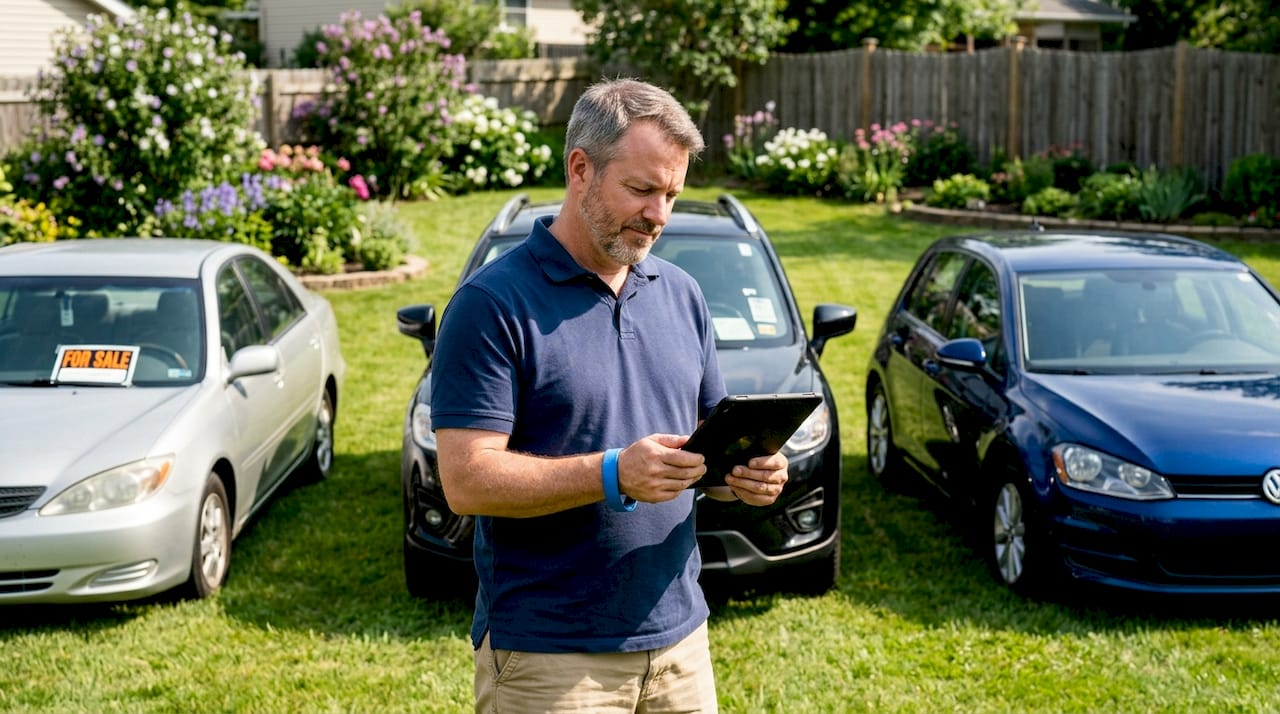
Car selling options compared means evaluating four core methods: private sale, dealer trade-in, instant cash offer, and online marketplace. Each method trades price for convenience at a different rate. Private sales typically yield the most money but require the most effort. Dealer trade-ins close fast but often pay wholesale, not retail. Instant cash platforms like CarMax pay same-day but price slightly below market. Your best option depends on how you weigh speed, payout, paperwork, and personal time.
1. Private sale: the highest payout with the most friction
Private sales deliver the best gross return of any selling method. The trade-off is time, effort, and real fall-through risk.

The numbers are clear. Facebook Marketplace private sales yield about 3.1% above market value with a median sale time of 6.2 days. That premium sounds attractive, but the same data shows a 15.8% fall-through rate. One in six deals collapses before money changes hands.
Here is what private selling actually requires from you:
- Writing and posting a detailed listing with quality photos
- Screening buyer inquiries and filtering lowball offers
- Scheduling and attending multiple test drives
- Handling title transfer, bill of sale, and lien release paperwork
- Accepting payment safely (certified check or bank transfer only)
Pro Tip: Meet buyers only in public, well-lit locations. Many police departments offer their parking lots as safe exchange zones for private vehicle sales.
Safety is a real concern with private sales. You are inviting strangers to your location and handing over access to your vehicle. For sellers who value their time or personal safety, the 3.1% premium may not justify the process. Knowing what paperwork to sell your car requires is a good first step before listing privately.
2. Dealer trade-in: fast and tax-smart, but watch the math
A dealer trade-in is the fastest way to exit your current vehicle and roll into a new one. The catch is that dealers price trade-ins at Actual Cash Value (ACV), which is the wholesale auction price, not what you paid or what you owe on your loan. Dealers base ACV on auction market data, not on your personal valuation or remaining loan balance.
Trade-ins carry a financial advantage that most sellers overlook: the tax credit. Trade-in tax credits in many states mean you only pay sales tax on the price difference between your new vehicle and your trade-in value. On a $40,000 purchase with a $15,000 trade-in, you pay tax on $25,000 instead of $40,000. That savings can close the gap between a trade-in offer and a private sale price.
Key trade-in facts to know before you walk into a dealership:
- ACV reflects the dealer’s cost to resell your car at auction, not retail value
- Dealers often bundle trade-in and new car negotiations to obscure the true offer
- Loan payoff amounts do not affect your ACV offer
- Trade-ins close in hours, not days
Separating your trade-in negotiation from your new car purchase negotiation is the single most effective tactic for getting a fair trade-in offer. Dealers who bundle both transactions can hide a low trade-in inside a seemingly good new car deal.
Negotiating trade-in and purchase separately prevents that shell game entirely. Get your trade-in offer in writing before you discuss the new vehicle price. For a deeper look at the tax math, the selling vs. trading in Canada tax guide breaks down how these credits work in practice.
3. Instant cash offer platforms: speed at a modest cost
Instant cash offer services are the closest thing to a guaranteed, frictionless sale. You submit your vehicle details online, receive an offer within minutes, and get paid the same day you drop off the car. Selling to instant-offer platforms results in same-day payment and zero paperwork, but nets about 2.4% below market value.
On a $20,000 vehicle, that 2.4% gap equals roughly $480. That is the concrete cost of convenience. For sellers who bill their time at a professional rate, or who simply cannot spend 15+ hours managing a private sale, $480 is a rational trade.
Who benefits most from instant cash offers:
- Sellers relocating quickly with no time to list and negotiate
- Owners with vehicles in average condition that won’t attract premium private buyers
- Anyone who has had a private sale fall through and needs certainty
- Sellers who want the transaction handled entirely by a registered business
The reliability factor matters. Instant offer platforms have near-zero fall-through rates compared to the 15.8% risk on Facebook Marketplace. You trade a small percentage of value for near-certain execution.
4. Online marketplaces: broader reach, longer timeline
Online marketplaces like Facebook Marketplace, AutoTrader, and Cars.com sit between pure private sales and instant cash platforms. They give you wider audience reach than a yard sign but require more management than a single-click offer.
Facebook Marketplace sellers see the highest net proceeds on clean-title cars priced between $8,000 and $28,000, with no platform listing fees. The median sale time runs 6.2 days, but the 15.8% fall-through rate remains a real risk. Paid platforms like AutoTrader and Cars.com attract more verified buyers, which reduces fall-through risk, but listing fees and longer sale timelines of 10–12 days reduce your net proceeds.
Pro Tip: List on Facebook Marketplace first since it costs nothing. If your car sits unsold after 10 days, move to a paid platform with a verified buyer pool.
The right marketplace depends on your vehicle’s price point. Cars priced above $28,000 or with salvage titles tend to perform better on paid platforms where buyers expect more vetting. Budget vehicles under $8,000 move fastest on free local platforms. Knowing how to sell your car from home can help you manage the listing process without leaving your driveway.
5. How to choose the right method for your situation
The best selling method is the one that fits your actual priorities, not the one with the highest theoretical payout. Use this framework to match your situation to the right option.
- You need cash fast (under 48 hours). Choose an instant cash offer service. You will net slightly below market, but the transaction closes with certainty and no paperwork burden.
- You want the highest possible payout and have time. List privately on Facebook Marketplace. Budget at least one to two weeks and prepare for the possibility of a deal falling through.
- You are buying a new vehicle at a dealership. Get your trade-in offer in writing first, then negotiate the new car price separately. Check whether your state offers a trade-in tax credit, because it can make the trade-in financially competitive with a private sale.
- Your vehicle is priced between $8,000 and $28,000 with a clean title. Facebook Marketplace delivers the best net return in this range with no listing fees.
- Your vehicle has high mileage or cosmetic issues. Instant cash platforms and dealer trade-ins are more realistic. Private buyers in this segment are harder to find and more likely to negotiate aggressively. A guide on selling a high-mileage car outlines realistic expectations for these vehicles.
- You value your time above the price difference. Opportunity cost favors trade-ins for sellers whose time is worth more than the extra money a private sale might generate. Private sales can consume 15 or more hours of your time.
- You want negotiating leverage at a dealership. Get multiple written cash offers before you walk in. A written offer from an instant cash platform gives you a real floor price to negotiate from.
Key takeaways
The best car selling method balances your payout goal, available time, and tolerance for deal risk, with private sales leading on price and instant offers leading on certainty.
| Point | Details |
|---|---|
| Private sales pay the most | Facebook Marketplace yields about 3.1% above market but carries a 15.8% fall-through rate. |
| Instant offers guarantee speed | Same-day payment costs roughly 2.4% below market, about $480 on a $20,000 vehicle. |
| Trade-in tax credits close the gap | State tax credits on new car purchases can make trade-ins financially competitive with private sales. |
| Separate your negotiations | Always negotiate trade-in value and new car price as two independent transactions. |
| Multiple offers give you leverage | Written cash offers from instant platforms create a real floor price before any dealership conversation. |
What I’ve learned after watching sellers leave money on the table
Most sellers focus entirely on the headline offer and ignore two factors that actually determine their net result: opportunity cost and negotiation structure.
The opportunity cost argument is real. Private sales consume 15 or more hours of your time across listing, screening, test drives, and paperwork. If your time has professional or personal value, that 3.1% premium shrinks fast when you account for the hours spent earning it. A seller billing $80 per hour who spends 15 hours on a private sale has effectively spent $1,200 in time to earn a few hundred dollars more than a trade-in would have paid.
The dealer shell game is the other trap I see repeatedly. Sellers walk in excited about a $3,000 trade-in offer and walk out having paid $2,000 more for the new vehicle than they needed to. The math only works in the dealer’s favor because both numbers moved at once. Separating those negotiations, as automotive experts consistently recommend, is the single tactic that protects you most.
My honest recommendation: get at least two written offers before you commit to anything. One from an instant cash platform, one from a dealer. Those two numbers tell you exactly what your car is worth in the real market right now. Then decide whether the extra effort of a private sale is worth the gap.
— Omar
Sellkamocars: a fair cash offer without the hassle
Sellers who want a fair price without the friction of private listings or dealer negotiations have a direct option with Sellkamocars.
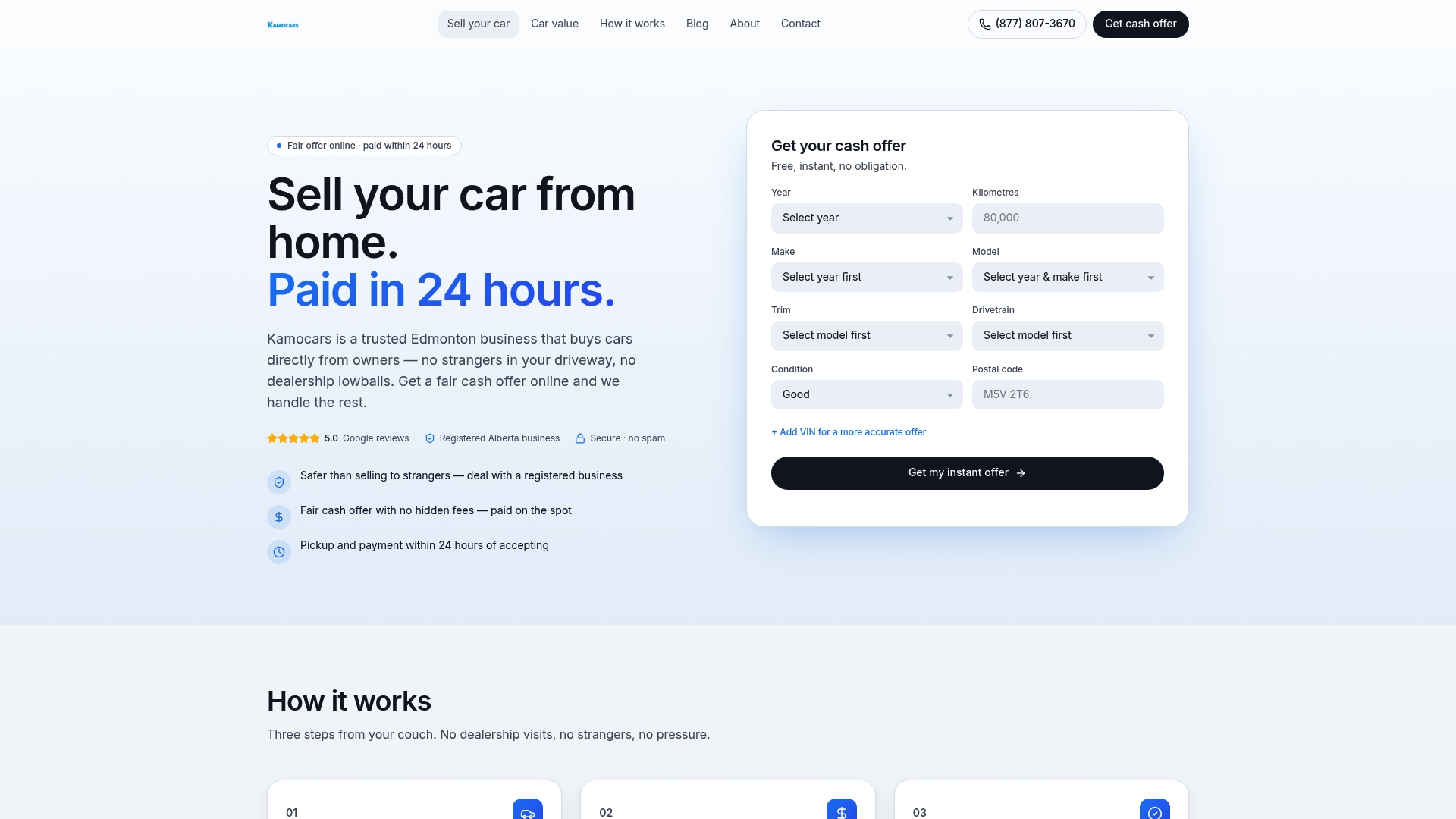
Sellkamocars provides instant appraisals based on current market data, handles free pickup, and completes payment within 24 hours. There are no strangers at your door, no haggling, and no paperwork burden on your end. With over 500 completed transactions and a strong customer rating, Sellkamocars operates as a registered business, which means your transaction is protected from start to finish. See exactly how the process works or go straight to a fair cash offer online to find out what your vehicle is worth today.
FAQ
What selling method gets me the most money for my car?
Private sales on platforms like Facebook Marketplace yield the highest return, about 3.1% above market value. The trade-off is a 15.8% fall-through rate and a median sale time of 6.2 days.
How does a dealer determine my trade-in offer?
Dealers base trade-in offers on Actual Cash Value (ACV), which reflects the vehicle’s wholesale auction price. Your loan balance and personal valuation do not affect the ACV offer.
Are instant cash offer platforms worth it?
Instant cash platforms pay about 2.4% below market value, roughly $480 on a $20,000 vehicle. That cost is worth it for sellers who need same-day payment and want zero paperwork.
Can a trade-in ever beat a private sale financially?
Yes. In states with trade-in tax credits, you only pay sales tax on the price difference between your new vehicle and your trade-in value. That tax savings can offset the lower trade-in offer compared to a private sale.
How do I protect myself from a low dealer trade-in offer?
Get at least one written cash offer from an instant offer service before visiting a dealership. That written number gives you a documented floor price and real negotiating leverage.
Recommended
Get a real cash offer in 2 minutes
Trusted business. Fair price. Paid on the spot when we pick up your car.